English
 Deutsch
 español
 العربية
 中文

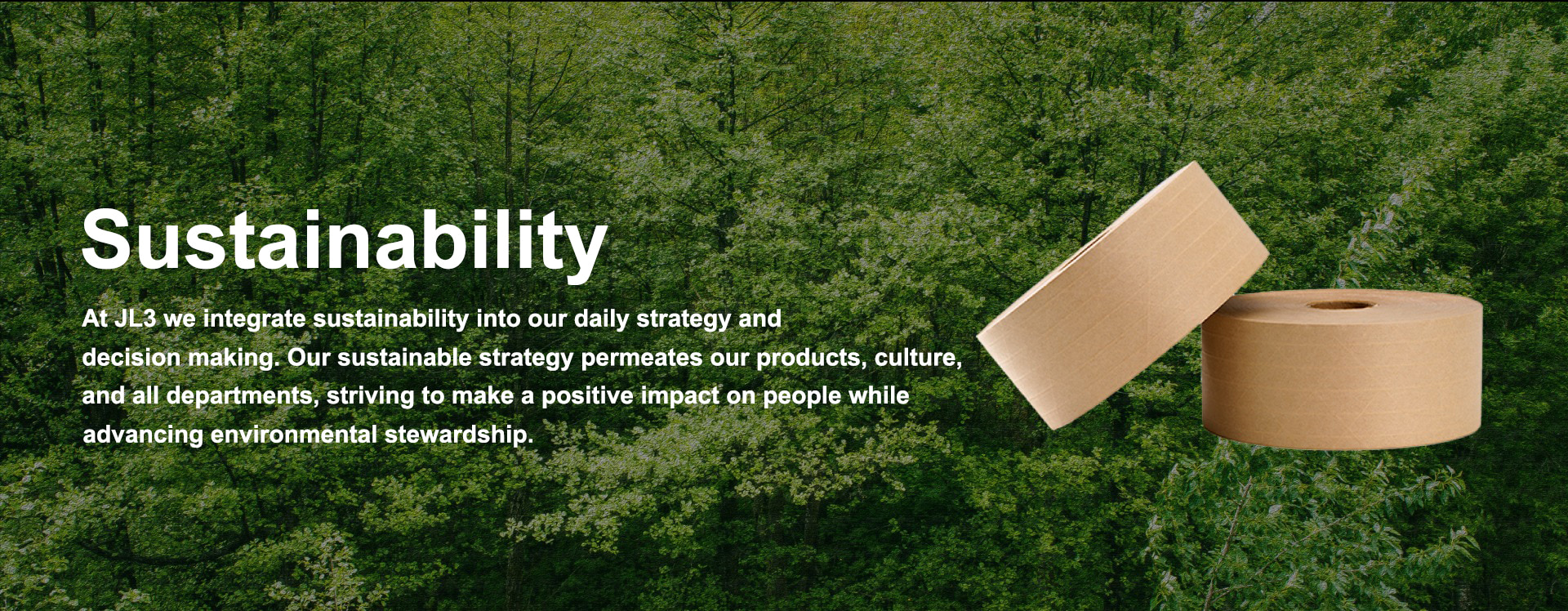
In warehouse packaging environments, the choice between different types of kraft paper tape directly affects sealing efficiency and package integrity. Based on our manufacturing experience, we observe that operations often need clarification on when to specify water-activated tape versus self-adhesive kraft tape, and whether reinforcement is necessary for their application.
Kraft paper tape functions through two distinct adhesive systems. Water-activated tape uses a starch-based adhesive that requires moisture to form a bond with corrugated cardboard. Once applied, the adhesive penetrates the cardboard fibers, creating a permanent seal that becomes tamper-evident. This makes it suitable for heavy-duty packaging, long-distance shipping, and applications where security is critical. Self-adhesive kraft tape, by contrast, uses a hot melt or synthetic rubber adhesive that bonds through pressure alone, offering faster application without the need for water activation equipment.
The reinforcement structure determines tensile strength and tear resistance. Standard reinforced kraft tape incorporates fiberglass strands in various patterns. Choose by carton weight: ≤10 lb non-reinforced JLN-370/382; 10–35 lb JLN-3140/3150; 35–55 lb JLN-3160/3750; 55–90 lb JLN-3780; >90 lb JLN-37120.
For operations handling mixed carton weights, we recommend maintaining both reinforced and non-reinforced options. Non-reinforced kraft tape works adequately for lightweight e-commerce packages under 10 lb where cost efficiency matters more than maximum strength. For international shipping, where there is no water station or dispenser at the packing point, self-adhesive kraft is the default; use water-activated tape only where water and a dispenser are available.
Application method also influences tape selection. Water-activated tape dispensers range from manual pull-and-tear units to automated systems with programmable length settings. Self-adhesive kraft tape can be applied with standard handheld dispensers or automatic carton sealing machines. The key consideration is matching tape width to carton size: 48 mm tape suits standard RSC boxes, while 72 mm or wider tape generally provides better coverage — confirm against your sealer setting.
From a material standpoint, kraft paper backing weight is 40–80 g/m² depending on grade. Heavier paper backing provides better puncture resistance but increases cost. These specifications should align with your box quality and storage conditions.
Temperature resistance represents another selection factor. JL3 WAT grades carry no published service-temperature range — check the TDS for the grade. Self-adhesive kraft tape with hot melt adhesive maintains performance from -5°C to 60°C.
For warehouses transitioning from BOPP tape to sustainable alternatives, we suggest starting with self-adhesive kraft tape for familiar handling characteristics, then evaluating water-activated tape for specific heavy-duty applications. The recyclability of kraft paper tape allows it to remain on boxes during the recycling process, unlike plastic-based tapes that must be removed.





 IPv6 network supported