Home News

CORPORATE NEWS

September 10, 2026
How to Spec Filament Tape for Heavy-Duty Bundling: Mono vs. Bi-Directional, and the Numbers That Actually Matter

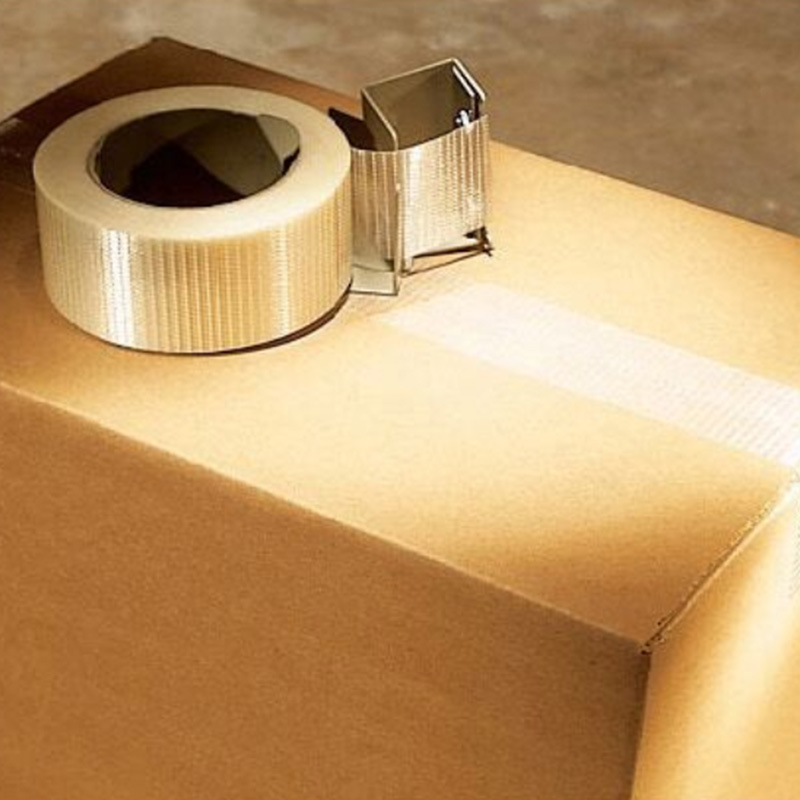
A buyer calls and asks for “your strongest filament tape.” We can ship it. But roughly half the time it is the wrong answer, because the highest tensile grade in our range also has one of the lowest peel values. Tensile is what people ask for. Peel and holding power are what decide whether the bundle survives. This is the selection logic we use internally. 1. What filament tape is actually for (and what it is not) First, clear up a common mistake. Filament tape is not a stronger version of carton sealing tape. Carton sealing tape holds a closure together; filament tape carries a load. Different job, different spec. Where it earns its place: Bundling and unitising. Holding pipe, bar stock, extrusions, timber or cable into a shippable unit. Component securing in transit. Shelves, trays and panels inside a refrigerator or washing machine that must not shift between factory and installation. Reinforcement. Bridging a weak point — a seam, a corner, a splice — rather than carrying the whole load. Heavy structural bundling. Steel cable, wire rope and bridge strand, where the tape is a permanent part of the assembly. Why buyers move to it from strapping: no tools, no tensioner, no PPE, no cut ends, no damage to coated or painted surfaces, and it conforms to irregular shapes that strapping cannot. It also takes print, which matters when the bundle carries a part number. 2. The first fork: mono-directional, bi-directional or double-sided This is the decision that matters most, and it has nothing to do with strength numbers. Type Prefix Structure Behaviour Use it when Mono-directional JLT Fiberglass or chemical fibre yarn running lengthwise, on PET or BOPP film Very strong along the roll, deliberately weak across it You wrap around something. All the load runs in one direction, and the cross-direction weakness lets you tear it cleanly by hand. Bi-directional JLW Yarn in a cross-hatch grid, on PET or BOPP film Strong in both directions, resists tear propagation The load is multi-directional or the tape will be punctured. Pallet securing, box reinforcement, sealing and transport reinforcement. Double-sided JLW-3xx / JLS Adhesive on both faces, fibre-reinforced (JLW) or cotton tissue (JLS) Bonds two surfaces rather than wrapping Sports flooring installation, decorative trim, nameplates, membrane switches, electronic labels. The one-line rule: if it goes around the load, mono-directional. If it sits on a surface and resists stress from more than one direction, bi-directional. If it joins two faces, double-sided. 3. Never spec on tensile alone — read three numbers together Every TDS gives tensile, peel adhesion and holding power. They pull against each other, and picking on tensile alone is the most expensive mistake in this category. Tensile strength — resistance to being pulled apart along the roll. This is the headline number. Peel adhesion (90°) — how hard it grips the surface. High tensile with low peel means th...

Learn More
CORPORATE NEWS
  • How to Spec Filament Tape for Heavy-Duty Bundling: Mono vs. Bi-Directional, and the Numbers That Actually Matter
    How to Spec Filament Tape for Heavy-Duty Bundling: Mono vs. Bi-Directional, and the Numbers That Actually Matter
    September 10, 2026

    A buyer calls and asks for “your strongest filament tape.” We can ship it. But roughly half the time it is the wrong answer, because the highest tensile grade in our range also has one of the lowest peel values. Tensile is what people ask for. Peel and holding power are what decide whether the bundle survives. This is the selection logic we use internally. 1. What filament tape is actually for (and what it is not) First, clear up a common mistake. Filament tape is not a stronger version of carton sealing tape. Carton sealing tape holds a closure together; filament tape carries a load. Different job, different spec. Where it earns its place: Bundling and unitising. Holding pipe, bar stock, extrusions, timber or cable into a shippable unit. Component securing in transit. Shelves, trays and panels inside a refrigerator or washing machine that must not shift between factory and installation. Reinforcement. Bridging a weak point — a seam, a corner, a splice — rather than carrying the whole load. Heavy structural bundling. Steel cable, wire rope and bridge strand, where the tape is a permanent part of the assembly. Why buyers move to it from strapping: no tools, no tensioner, no PPE, no cut ends, no damage to coated or painted surfaces, and it conforms to irregular shapes that strapping cannot. It also takes print, which matters when the bundle carries a part number. 2. The first fork: mono-directional, bi-directional or double-sided This is the decision that matters most, and it has nothing to do with strength numbers. Type Prefix Structure Behaviour Use it when Mono-directional JLT Fiberglass or chemical fibre yarn running lengthwise, on PET or BOPP film Very strong along the roll, deliberately weak across it You wrap around something. All the load runs in one direction, and the cross-direction weakness lets you tear it cleanly by hand. Bi-directional JLW Yarn in a cross-hatch grid, on PET or BOPP film Strong in both directions, resists tear propagation The load is multi-directional or the tape will be punctured. Pallet securing, box reinforcement, sealing and transport reinforcement. Double-sided JLW-3xx / JLS Adhesive on both faces, fibre-reinforced (JLW) or cotton tissue (JLS) Bonds two surfaces rather than wrapping Sports flooring installation, decorative trim, nameplates, membrane switches, electronic labels. The one-line rule: if it goes around the load, mono-directional. If it sits on a surface and resists stress from more than one direction, bi-directional. If it joins two faces, double-sided. 3. Never spec on tensile alone — read three numbers together Every TDS gives tensile, peel adhesion and holding power. They pull against each other, and picking on tensile alone is the most expensive mistake in this category. Tensile strength — resistance to being pulled apart along the roll. This is the headline number. Peel adhesion (90°) — how hard it grips the surface. High tensile with low peel means th...

  • Stop Sealing Cartons With Plastic Tape: A Practical Spec Guide to Water-Activated Tape
    Stop Sealing Cartons With Plastic Tape: A Practical Spec Guide to Water-Activated Tape
    September 09, 2026

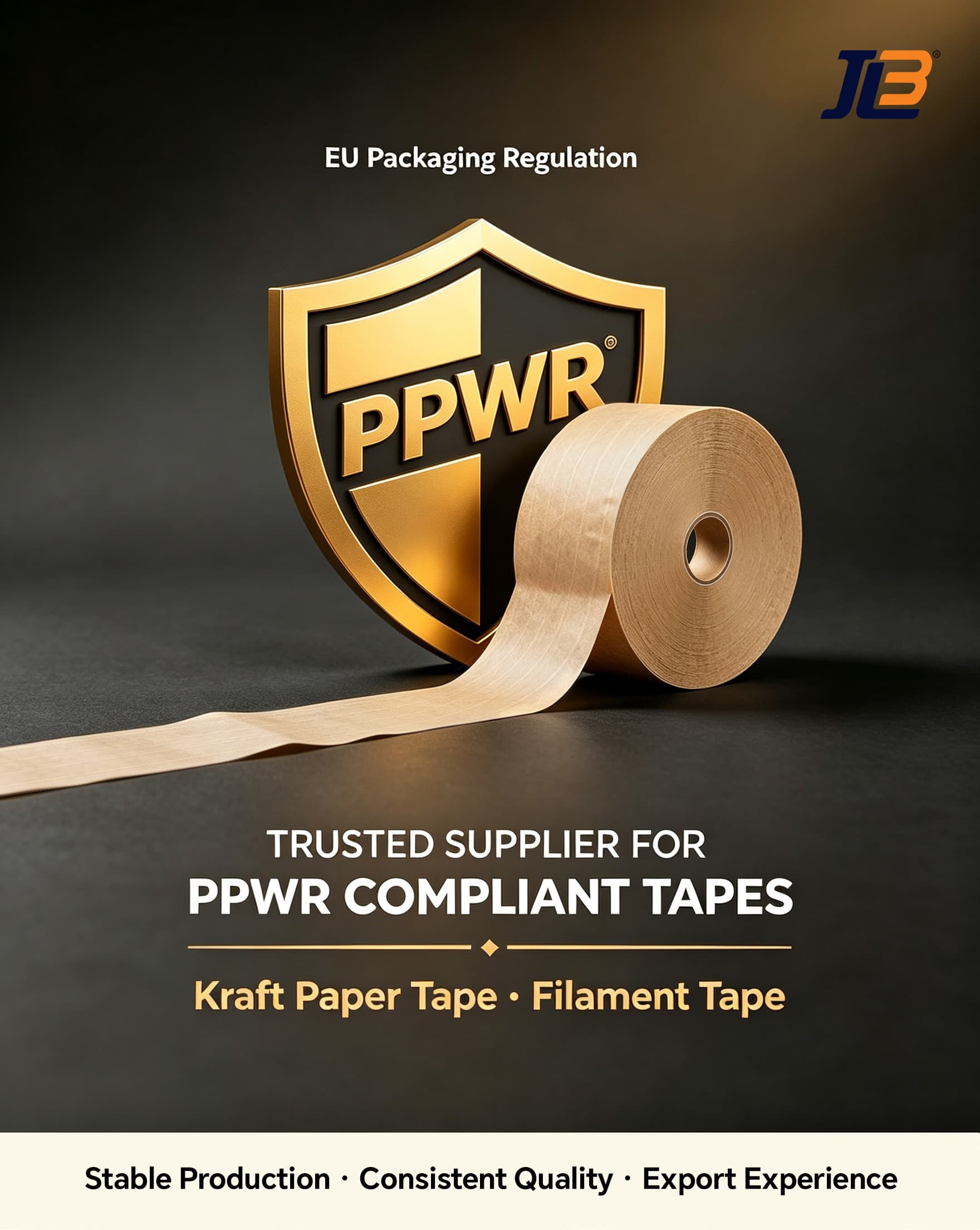
    Over the past one years, two questions have dominated our inbox. The first: “Is your tape PFAS-free?” The second: “We switched to paper tape and now our cartons pop open — what went wrong?” They look like unrelated problems. They are not. Both come from the same source: the material changed, but the selection logic never did. This is the method we walk our own distributors through. 1. The problem with plastic tape isn't just “it doesn't break down” Start with something that gets overlooked. The real headache with BOPP tape isn't that it lingers in a landfill — it's that it contaminates the corrugated recycling stream. When a carton hits the pulper, plastic tape, plastic labels and plastic strapping become screen rejects that have to be separated out and disposed of. That extra step is exactly why European recyclers have spent years pushing for cartons that can be recycled with the tape still on. The line in the sand is the EU PPWR (Packaging and Packaging Waste Regulation, EU 2025/40). For the first time, it sets hard limits on two substance groups in packaging: Article 5(5) — PFAS: total per- and polyfluoroalkyl substances capped at 0.25 mg/kg. At that level, “compliant” effectively means “not detected.” Article 5(4) — heavy metals: lead, cadmium, mercury and hexavalent chromium, also capped in aggregate. JL3 is already tested across the line Between July and August 2026 we ran the full PPWR panel on our entire range: reinforced and non-reinforced water-activated tape, reinforced and standard self-adhesive kraft tape, and both mono-directional and bi-directional filament tape. PFAS came back not detected (ND) across the board — far below the 0.25 mg/kg limit — tested to EN 17681-1:2025 by LC-MS/MS. On heavy metals, 12 kraft paper products, all filament tapes, printing inks, and 10 categories of packaging accessories (corner board, stretch film, shrink film, strapping, cartons, pallets, liners) all passed. So compliance is one thing you can stop worrying about — the reports already exist. What's left is a purely technical question: choosing the right grade. 2. Why water-activated tape holds better than it looks First-time users are almost always skeptical. It's a strip of paper. You wipe it with water. Surely that can't beat plastic? The mechanism is completely different. BOPP tape relies on pressure-sensitive adhesive sitting on the surface of the board. Water-activated tape does something else: once wetted, the starch adhesive penetrates into the corrugated fibers and bonds into the carton itself. That's why opening a properly sealed carton tears away the top ply of the board. The tape wasn't stuck on — it grew in. Three consequences follow directly: Tamper evidence. Once opened, it cannot be restored. Pressure-sensitive tape can be lifted and re-applied; this cannot. Temperature stability. There's no PSA to soften in a hot container or l...

  • Which WAT Carton Sealing Machine Should You Choose for Different SKUs and Sizes?
    Which WAT Carton Sealing Machine Should You Choose for Different SKUs and Sizes?
    July 30, 2026

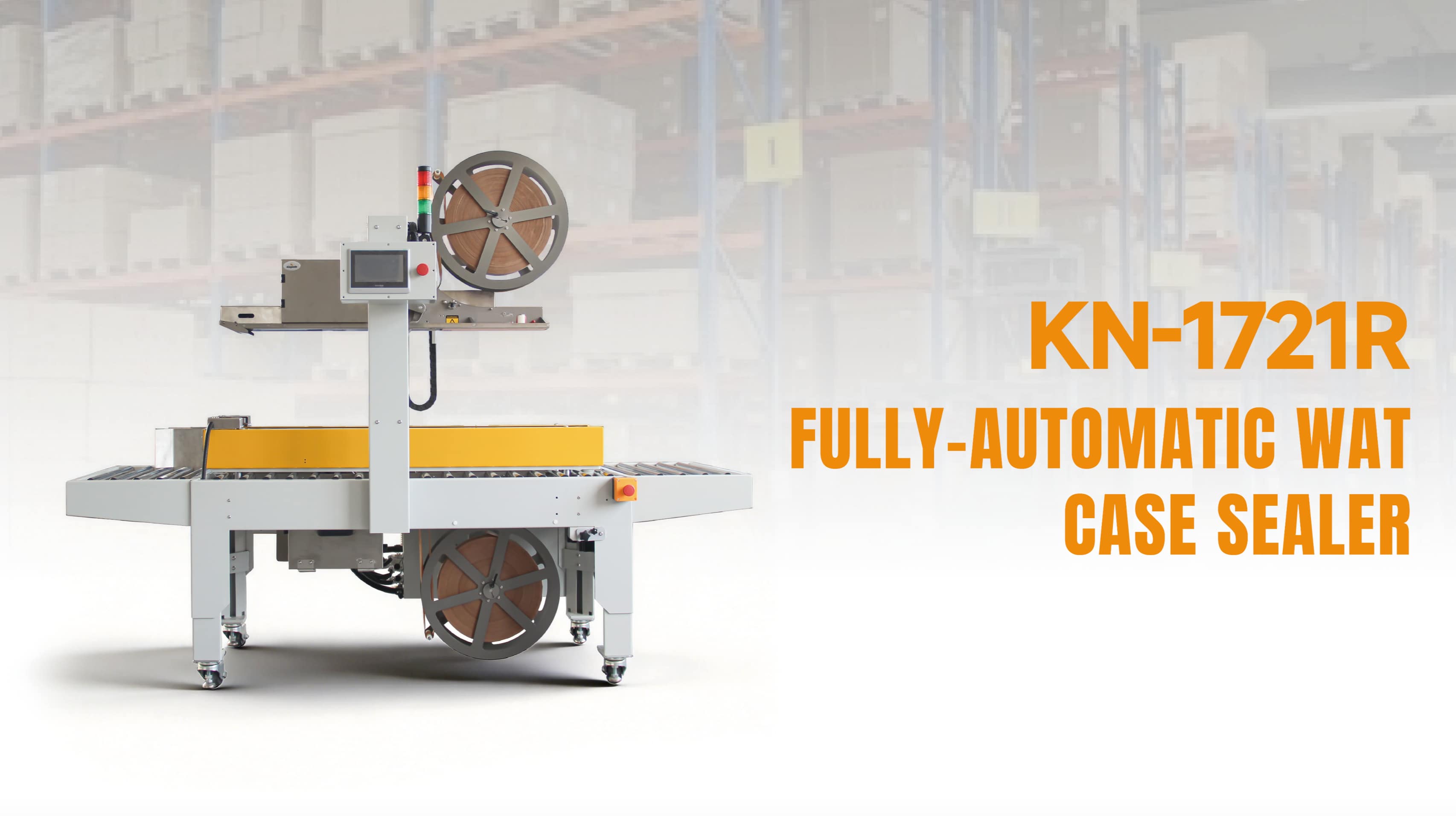
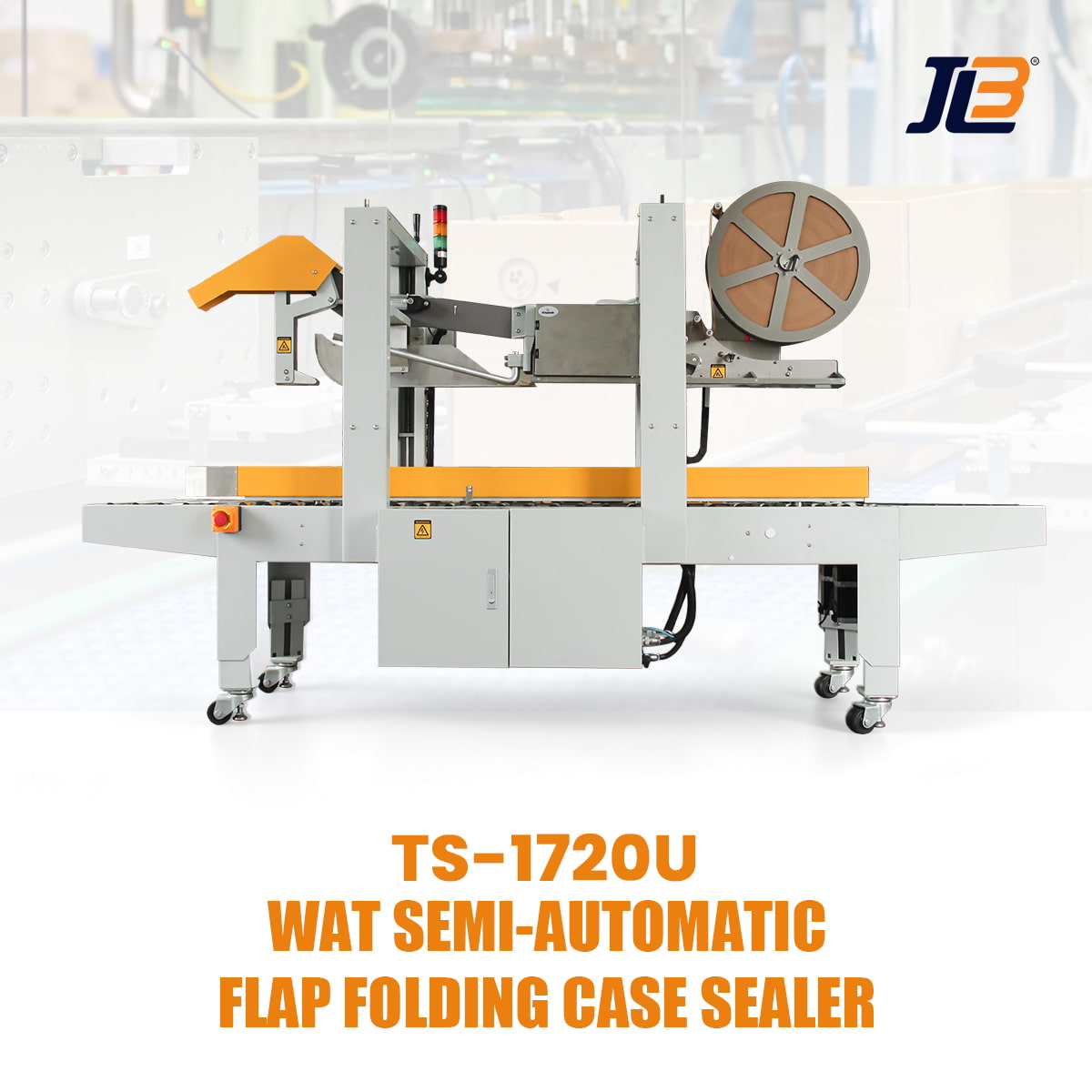
    You've probably seen it on your packaging line: the carton sealing machine finishes one carton type, the next SKU arrives at the feed inlet, and the line stops. A worker walks over, loosens the guide rails, adjusts the width, resets the height, tightens everything back, runs a test carton, and adjusts again. Several minutes lost per switchover. Multiply that by the number of changeovers a day, and an hour's worth of sealing output is gone. In all of this, the worker is fine, the tape is fine, and the carton is fine. The problem is the machine: it was designed to run one carton type all day, and as your order mix grows more varied, that setup stops working. Before choosing a machine, one question comes first: why water-activated tape? Traditional pressure-sensitive tape relies on surface contact. The adhesive grips the outer linerboard of the corrugated board through initial tack. But the bond stays on the surface, and under continuous load or temperature changes, surface adhesion is the first thing to fail. Water-activated tape bonds differently. Its starch adhesive penetrates the corrugated fibers and cures within the substrate. Once set, tape and carton are structurally integrated—they cannot be peeled apart without tearing a layer of board. For a modern packaging line, this fiber-level bond removes the weakest point in carton sealing. Water-activated tape also meets current environmental regulations, is fully recyclable with the carton, and provides tamper-evident closure. Fiber-reinforced water-activated tape adds tensile strength for heavier loads. This matters for machine selection: a WAT sealer integrates a water-activation system into the tape path. The machine wets the tape, applies it, and presses down the flaps—a different mechanical process from pressing a dry pressure-sensitive strip onto a carton. How to Choose the Right Machine for Your Business JL offers high-performance WAT carton sealing machines tailored to different operational needs. The table below compares the three models in the series. Item KN-1717USemi-automatic KN-1721RFully-automatic KN-2626USemi-automatic Case Sealing Speed 8-13 cases/min(Depending on case size and quality) 8-13 cases/min(Depending on case size and quality) 8-13 cases/min(Depending on case size and quality) Max Carton Size Up to 43 × 53 cm Up to 43 × 53 cm Up to 66 × 66 cm Max Load 38 kg 38 kg 60 kg Size Adjustment Manual Automatic self-adaptation Manual Changeover Downtime Minutes per changeover Near zero—machine adapts automatically Minutes per changeover Power 1.1 kW 1.5 kW 1.1 kW Water Tank Dual 2L tanks Dual 2L tanks Dual 2L tanks Tape Roll Capacity Up to 500 mm dia.(approx. 1,300 m) Up to 500 mm dia.(approx. 1,300 m) Up to 500 mm dia.(approx. 1,300 m) Machine Dimension(L × W × H) 93" × 43.9" × 65"(236 × 112 × 165 cm) 93" × 43.9" × 65"(236 × 112 × 165 cm) 128" × 53" × 70"(326 × 135 &t...

  • Why JL3 Tape is Your Tape Supplier Choice
    Why JL3 Tape is Your Tape Supplier Choice
    July 29, 2026

    If you have spent any real time sourcing packaging tape, you already know the cycle. The established international brand quotes a price that leaves almost no margin. You switch to a cheaper supplier. The sample passes. Production starts. Then somewhere around the fourth or fifth lot, tensile strength drops, adhesion weakens, and your customers start calling. So you qualify yet another supplier, your incoming inspection workload doubles, and the complaints never fully stop. JL3 was built to break this cycle. Here is what 21 years of in-house tape manufacturing actually looks like—and how to verify every claim in this article yourself. 21 Years of In-House Manufacturing, Three Production Bases JL3 has been operating for 21 years. What we do is push the balance between verified performance and unit cost as far as the manufacturing process allows. We run three production bases in Fujian, Shanghai, and Guangdong. Our starch-based adhesive formulations, reinforcement yarn lay-up patterns, and backing weight selections have gone through multiple internal revision cycles, refined against real customer application scenarios. That process has produced a complete product line spanning light-duty, medium-duty, and heavy-duty requirements. JL3 product quality now stands on par with leading international brands, and we rank among the top three globally in reinforced water activated kraft paper tape. A Concrete Example: JLN-37120 Heavy-Duty Water Activated Tape Take our JLN-37120 heavy-duty water activated tape as a concrete example. Its TDS parameters match those of the leading European competitor. Product quality is consistent, the supply chain is stable, and the landed cost leaves actual margin room for the buyer. That is what twenty-plus years of owning every step of the manufacturing process looks like in practice. You can review the full construction and test data: Understanding JLN-37120 Heavy Duty Reinforced Water Activated Tape. A Team That Handles Everything from Adhesives to Finished Rolls, Responding to Your Needs Faster Full in-house development also means faster response. When you send us a specification sheet—backing weight in grams per square meter, virgin or recycled kraft paper, yarn count, whether the tape must be 100% compostable, and target tensile strength—our sales engineer does not need to relay the request to an external factory and wait for a reply. The same team that formulates the adhesive can confirm feasibility directly. One round of communication gets you a confirmed specification, a realistic lead time, and a sample roll. No quotes from multiple different suppliers, no waiting on third parties. Batch-to-Batch Consistency, by Procedure Batch-to-batch consistency is the single criterion that separates a reliable supplier from an unreliable one. If the tensile strength on the data sheet reads one value, but lot 47 tests slightly higher and lot 52 tests slightly lower, that variance translates directly into inconsis...

  • Introducing the new product KN-80Hi PSA Tape Dispenser
    Introducing the new product KN-80Hi PSA Tape Dispenser
    June 30, 2026

    When you need to upgrade your packaging capacity, manual tape dispensing processes can become a bottleneck limiting output and increasing labor costs. Our self-developed KN-80Hi pressure-sensitive tape dispenser combines intelligent sensing technology with superior mechanical design to provide a consistent, high-speed tape coating solution for self-adhesive kraft paper tape.   The core advantage of the KN-80Hi lies in its flexible dispensing modes. Operators can switch between manual, automatic, and iSense contactless modes with a single button. The iSense mode uses optical sensors to detect hand movements, allowing workers to dispense tape at their own natural pace without touching the machine. For fully automated production lines, a foot pedal option with automatic carton size detection enables hands-free operation and seamless integration with the sealing workflow. Whether you need direct sealing of standard cartons or H-sealing of heavy-duty cartons, the machine can adapt to your packaging needs.   Speed ​​is critical in high-volume environments. The KN-80Hi has a cutting speed of up to 1100 mm/s, and the tape feed speed is adjustable between 250 and 1100 mm/s. This allows operators to fine-tune the dispensing rate based on tape width and carton size. High-capacity rolls accept tape rolls with an outer diameter of up to 350 mm and a core diameter of 38 mm or 76 mm, reducing roll changeover frequency and maximizing uptime during peak production periods.   Maintainability and operational flexibility are integrated into the design. The tape feed chamber and blade assembly are easily disassembled, allowing for quick adjustments to tape pressure and blade replacements without the need for specialized tools. The machine supports multiple power supply configurations, including plug-in power, built-in battery, and external battery options, enabling flexible deployment of dispensers in various locations, unrestricted by power outlet locations. For jobs requiring productivity tracking, data logging and connectivity capabilities are provided to monitor tape usage and machine performance.

  • Increase Packaging Productivity
    Increase Packaging Productivity
    June 11, 2026

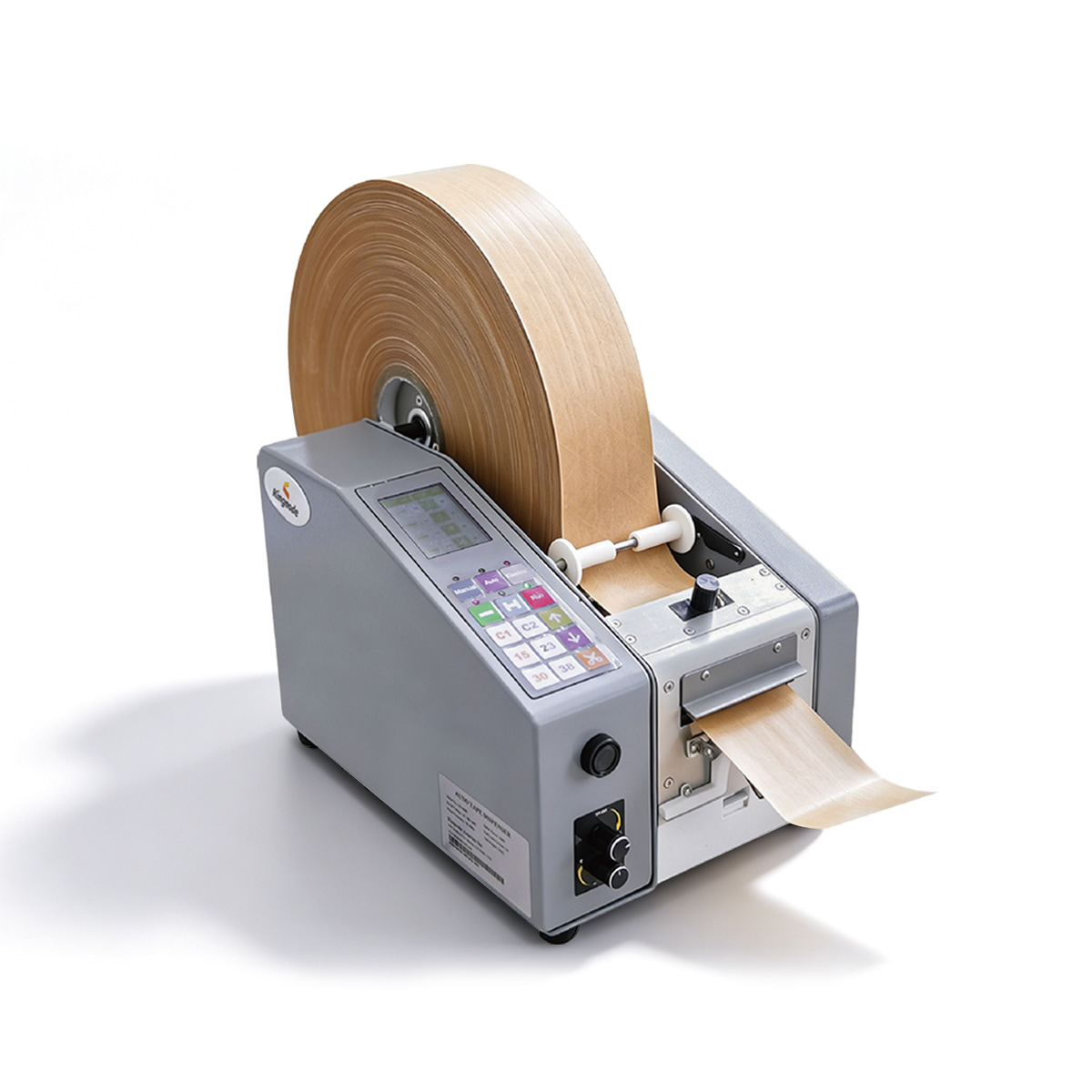
    Boost Productivity with Water-Activated Tape Dispensers Increase warehouse productivity, operations, and packing efficiency by switching from hand-held tape guns to electric water-activated tape dispensers.  Why Does a WAT Dispenser Improve Packaging Efficiency? Our water-activated tape can be precisely cut to preset lengths, and a single strip is all it takes to complete a secure seal — significantly improving overall packaging efficiency. Hand-held Tape Gun VS Water-Activated Tape Dispenser The Hidden Toll of Manual Tape Guns In high-throughput environments, packers frequently rely on traditional handheld tape dispensers. Weighing approximately 3 pounds, these tools demand continuous gripping and repetitive wrist motions. Over a standard shift, this inevitably leads to operator fatigue, inconsistent seal quality, and a higher incidence of Repetitive Strain Injury (RSI), ultimately driving up hidden labor costs. The Advantage of Automated Water-Activated Tape Dispensers Switching to our JL3 electric water-activated tape dispenser fundamentally transforms the workflow. By automating the cutting process, it eliminates the need for prolonged gripping and repetitive wrist movements, while delivering superior packaging results. Ergonomic Relief: WAT dispensers eliminate the strenuous, repetitive motions associated with other carton-sealing solutions, helping your packers stay productive throughout the entire shift.Tamper-Evident Security: Water-activated tape bonds directly to the carton, helping prevent box damage and theft while creating a professional packaging appearance.Optimized Material Usage: A single strip of tape is all it takes for a strong, secure seal — reducing overall tape consumption and material waste. Improve Your Carton Sealing Method and Packaging Process Increase ProductivityOur tape dispensers boost carton sealing efficiency and reduce the man-hours needed to fulfill e-commerce orders. Improve Packer SafetyUsing water-activated tape dispensers instead of handheld tape guns helps avoid repetitive stress injuries. Reduce CostsOne strip seals the carton — no repeated application needed. This effectively cuts packaging waste and lowers overall material costs.

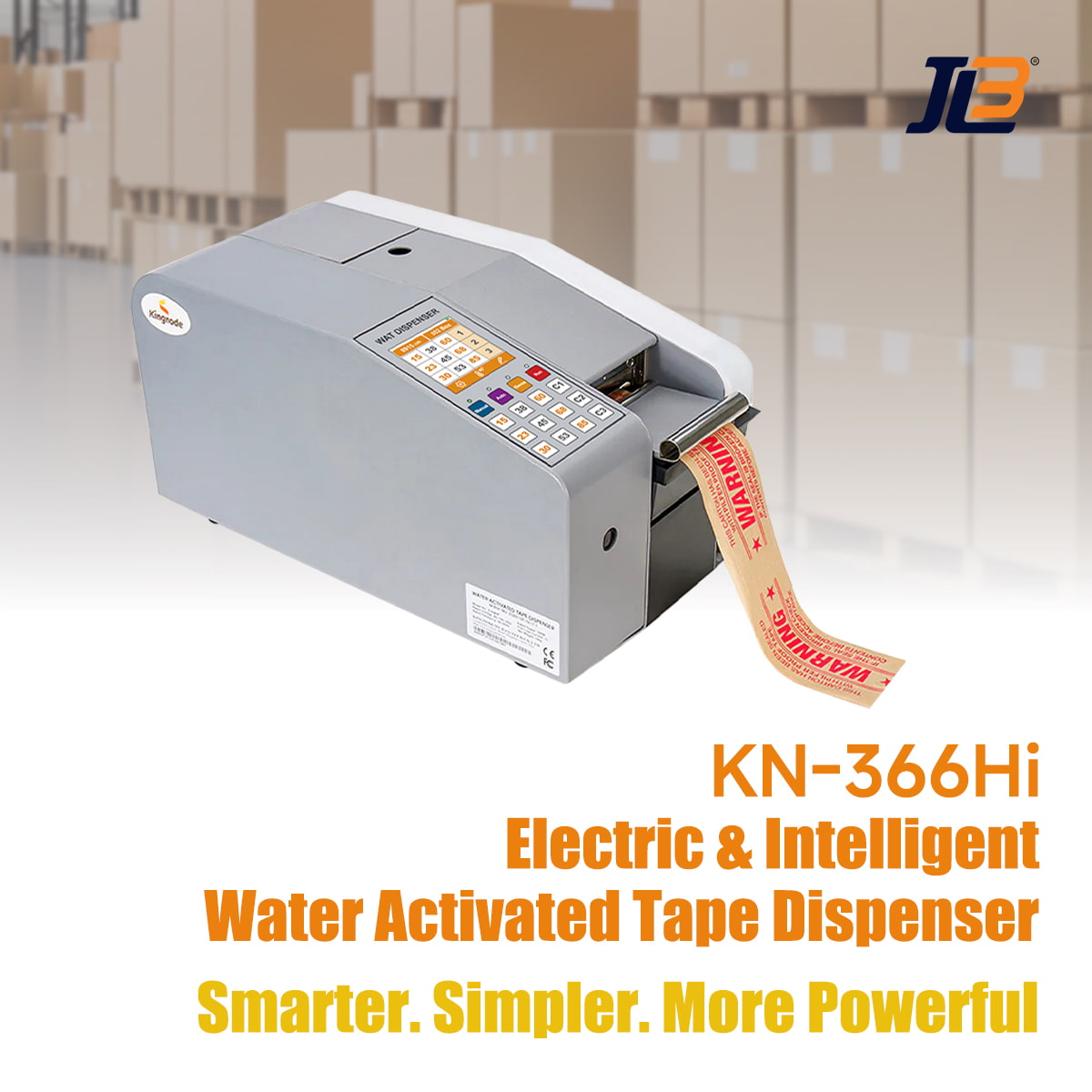
  • Optimizing Water Activated Tape Application with the KN-366Hi Electric Dispenser
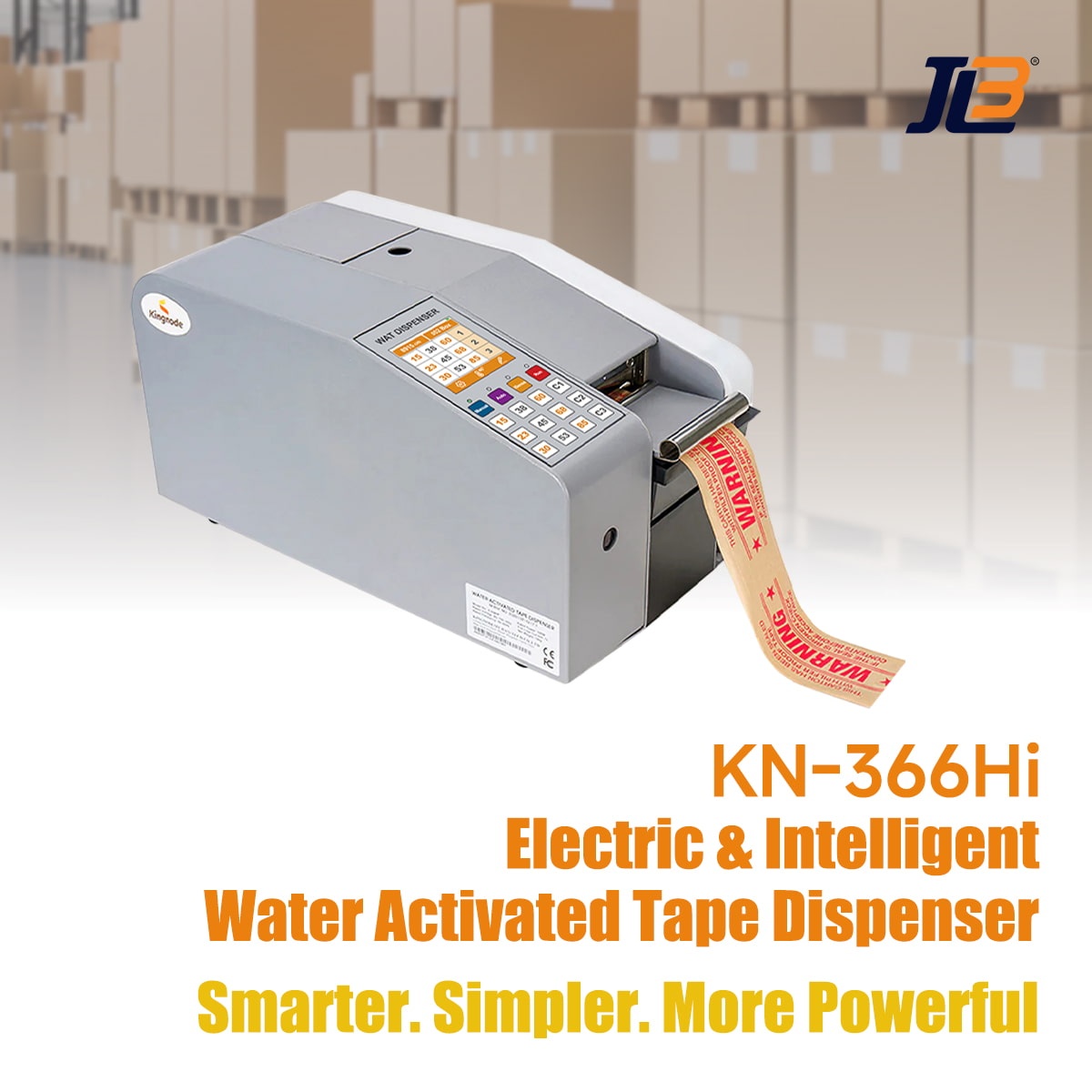
    Optimizing Water Activated Tape Application with the KN-366Hi Electric Dispenser
    May 29, 2026

    The efficiency of packaging production lines often depends on the consistency of tape application and the frequency of operational interruptions. The KN-366Hi electric dispenser was developed to address these variables, combining flexible dispensing modes, production line integration capabilities, and operational data tracking. Within our water-activated tape equipment series, this model is suitable for operating environments requiring precise moisture control, reduced roll changedown time, and seamless integration with a wider range of assembly processes.   The KN-366Hi's core functionality revolves around three dispensing modes. Manual mode features a touchscreen interface offering nine preset lengths and three customizable programmable settings, allowing operators to fine-tune cutting dimensions via buttons for incremental precision. Automatic mode triggers dispensing at configurable time intervals, with a default setting of five seconds, achieving standardized adhesive application during continuous carton flow. The iSense contactless sensing mode is triggered by hand gestures, allowing operators to control the dispensing speed at their own pace, eliminating the need for physical button contact, reducing wear on control components, and adapting to the operational needs of high-frequency packaging stations. All three modes operate through the same water activation mechanism, ensuring uniform wetting of starch-based adhesives regardless of the triggering method.   Operational continuity is supported by a 1400-foot tape roll capacity, which effectively extends single-run time and reduces roll changeover frequency. This design directly reduces downtime caused by tape roll changes in high-volume facilities. The dispenser is equipped with a low-water-level warning system, combining visual on-screen prompts with an audible buzzer alarm to prevent dry glue application due to lack of moisture. Insufficient moisture prevents starch adhesive from fully penetrating the corrugated cardboard surface, weakening fiber bond strength. Proper activation is crucial for tamper-proof sealing and recyclable packaging processes; the quality of fiber-to-fiber bonding directly determines the recycling efficiency of downstream pulping.   Data logging tracks daily tape consumption length and carton sealing volume, accumulating historical records for easy maintenance scheduling and consumable forecasting. This data visualization supports operations transitioning to lean manufacturing, with equipment performance metrics directly applicable to process adjustments. The interface design emphasizes intuitive navigation, minimizing training needs even during staff rotations.   Within our product portfolio, the KN-366Hi is positioned in the high-end electric dispenser segment, filling the application gap between basic hand-tear dispensers and fully automated carton sealers. This device is suitable for scenarios requiring adjustable cut lengths and multi-mode ...

1 2
A total of2pages

We are ready to provide you with the best solutions for your packaging needs.

Send A Message

Send A Message
If you are interested in our products and want to know more details,please leave a message here,we will reply you as soon as we can.
Submit
Contact Us:info@jl3tape.com

Home

Products

whatsApp

contact