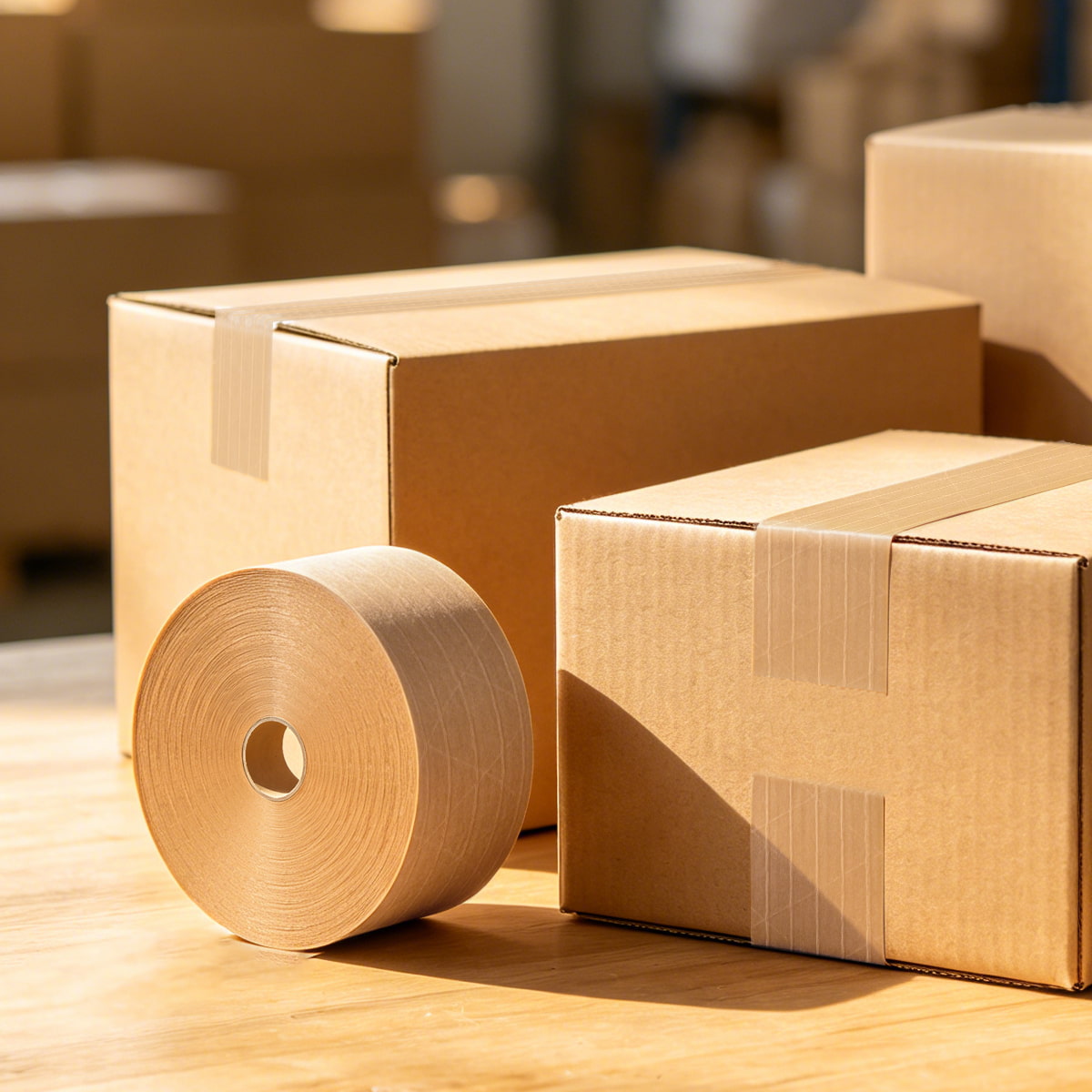
When choosing tape for corrugated cardboard boxes, the end-of-life recycling process is often overlooked. Traditional BOPP packaging tapes cause significant plastic pollution. While standard water-activated tapes reinforced with glass fiber address the plastic issue, they introduce new challenges. Glass fiber is inorganic and does not decompose during paper recycling, requiring separation at the p...
Cardboard box cracking and damage during transportation can originate from the adhesive tape as well as from the corrugated cardboard itself. This design logic shapes our water-activated kraft paper tape products, with each parameter corresponding to a suitable weight failure mode, from the JLN-3140 light-duty tape to the JLN-37120 heavy-duty tape. Purchasing and technical personnel truly n...
Imagine a pallet of consumer electronics shows up at a retailer distribution center in Hamburg. Cartons intact, product fine, paperwork clean. Receiving rejects the whole shipment. Not the product. The tape. BOPP-sealed corrugated boxes now fall outside the take-back agreement, because mixed-material packaging requiring manual separation at the sorting stage is no longer accepted at that facility....
Sustainability regulations are tightening, customers are demanding plastic-free packaging, and shipping damage claims keep climbing. For packaging managers and distributors, the choice of carton sealing tape is no longer a commodity decision — it affects brand image, compliance, and total logistics cost. Water-activated tape (WAT), also known as gummed paper tape, has become the go-to soluti...
Water-activated tape gets most of the sustainability headlines — but not every packing station has a water source, and not every seal needs activation. Self-adhesive kraft paper tape, coated with hot melt adhesive, delivers the same eco-friendly paper look with instant stick. Knowing when to specify it — and when to stay with water-activated — saves cost, time, and customer compl...
Reinforced water-activated kraft tape is marketed as recyclable with the carton — and on paper, it is. The kraft backing and the starch-based adhesive both break down in the repulper. But the fiberglass reinforcement does not: in paper mills, glass filaments are screened out during repulping and typically end up landfilled as process waste. For buyers who need a genuine mono-material claim &...
Take a recycled cardboard box, seal it up, and then peel off the tape an hour later. Some tapes will tear the paper fibers, leaving behind visible damage, while others come off cleanly—as if they had never been applied at all. Given the same batch of cardboard boxes, which type of tape avoids this issue of failing to adhere properly? Short version: Test the adhesion of various tapes when use...
The cheapest way to stop seal failures is also the simplest: match the tape to the weight of the carton. A tape that is too light for the box will fail no matter how carefully it is applied, and a tape that is heavier than the box needs is money spent for nothing. Get the weight right first, and most of the other decisions get easier. Why weight decides the grade A sealed carton is not a still obj...
Some packing stations have no water at the bench. A warehouse aisle, a market stall, a van loaded for local deliveries, a pop up packing table at a trade show. In those places, water activated tape is the wrong tool, because there is nothing to activate it with. Self adhesive kraft tape is the answer there. It sticks on contact, with no water, no waiting, and no machine. The only question is which...