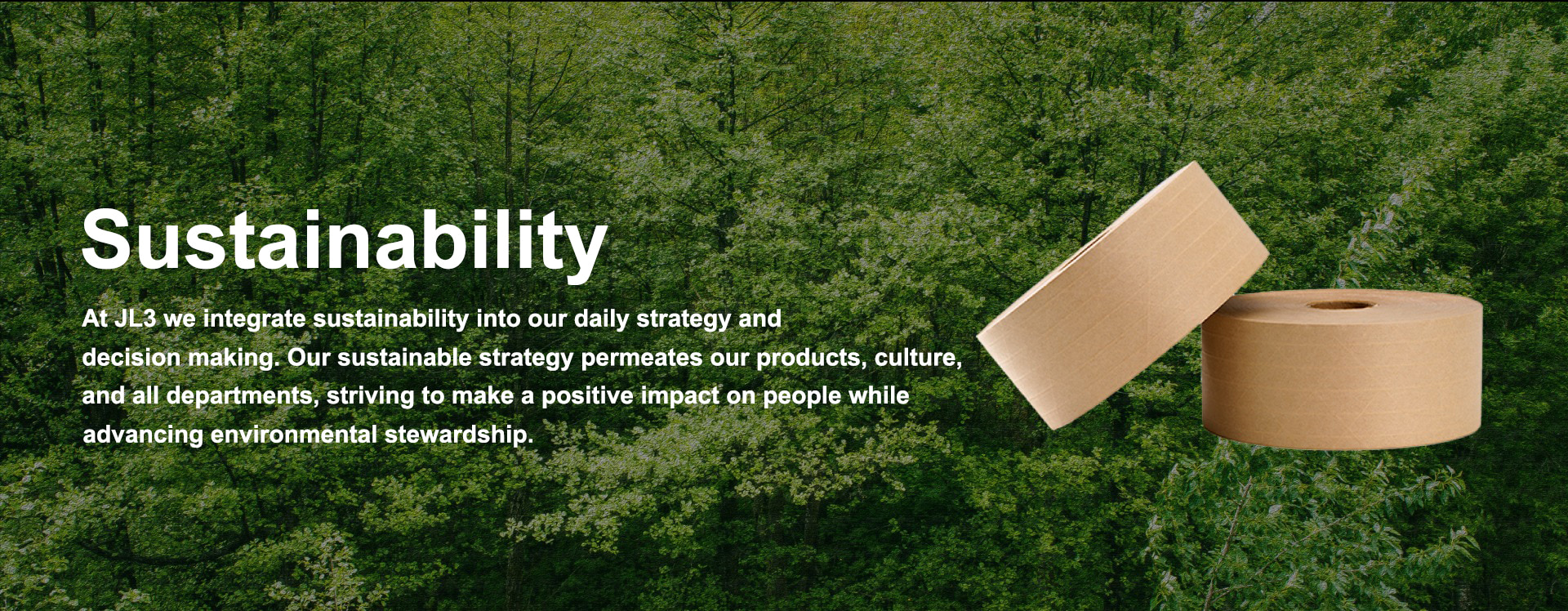
Water-activated tape gets most of the sustainability headlines — but not every packing station has a water source, and not every seal needs activation. Self-adhesive kraft paper tape, coated with hot melt adhesive, delivers the same eco-friendly paper look with instant stick. Knowing when to specify it — and when to stay with water-activated — saves cost, time, and customer compl...
Double-Sided Filament Tape: The Hidden Workhorse of Industrial Bonding When people hear "filament tape," they picture strapping and bundling. But add a second adhesive side and a release liner, and the same fiberglass reinforcement becomes something else entirely: a dimensionally stable, high-tack bonding layer that holds foam, rubber, fabrics, and flooring in place where ordinary double-sided tap...
Package tampering and porch theft have quietly become a line item on many brands' P&L. Theft during transit is even harder to detect — because plastic pressure-sensitive tape simply sits on top of the box. A hand can slide under it, contents can be lifted out, and the carton looks untouched. Water-activated tape (WAT) takes a fundamentally different approach: it welds itself to the carto...
Clean Removal Filament Tape: Bundle High-Value Surfaces Without the Residue Strapping tape that does its job too well creates a new problem after delivery: adhesive residue. On stainless-steel coils, powder-coated appliance panels, or lacquered furniture surfaces, leftover glue means rework, scrap, or a customer claim — and the cleanup usually costs more than the tape ever did. Clean removal...
Frozen foods, meat processing, dairy facilities, unheated warehouses — cold environments are hostile to ordinary packaging tape. In subzero conditions, standard adhesives lose instant stick, then brittle with time. The result is not just cosmetic; it's a supply chain failure: open seals, spilled inventory, rejected loads. Cold-temperature tape solutions are engineered specifically for that e...
The EU Packaging and Packaging Waste Regulation (EU 2025/40, "PPWR") is being phased in, altering compliance standards for all businesses placing packaged goods on the European market. Adhesive tape is classified as a packaging component; therefore, if you purchase tape for use on cartons destined for the EU, the PPWR applies to your supply chain—whether you are aware of it or not. Sp...
Filament tape — plastic film reinforced with glass or synthetic fibers — is the workhorse of bundling, strapping and carton reinforcement. But "filament tape" covers three different constructions, and picking the wrong one is a common reason for tape failure on the line. Here's how to choose. The three families Mono-directional . The reinforcing fibers run in one direction — alon...
Every carton sealing tape ships with a technical data sheet, and every TDS looks reassuringly precise: peel adhesion 83 oz/in, shear 48 hours, tensile 124 lbs/in (JLT-602). The problem is that these numbers are only comparable when you know what each test actually measures — and many field failures trace back to specifying the wrong property, not a defective product. What a TDS is — an...
Walk any packing station and you will see the same roll: 2-inch tape, regardless of what is inside the box. Width became a habit, not a specification. But width, thickness and reinforcement are doing three different jobs, and matching them to box weight is the cheapest reliability upgrade a packing operation can make. Width: contact area is seal security Wider tape means more adhesive in contact w...
 English
 Deutsch
 español
 العربية
 中文





 IPv6 network supported