English
 Deutsch
 español
 العربية
 中文

E-commerce fulfillment punishes slow sealing in a way that wholesale shipping does not. Orders are small, mixed, and urgent; cartons change size every few minutes; the customer opens the carton on camera, in a sense, and judges the brand by what they find inside. A fulfillment seal has to do three jobs at once: keep the packing line moving, survive a parcel network that is rougher than a pallet network, and arrive looking clean and untampered. This guide sets out how to seal for all three.
A wholesale carton travels on a pallet, protected by its neighbors. A parcel travels alone, dropped into cages, sorted by machines, and carried by hand. It is also opened by a customer, not a warehouse, so a torn, messy, or resealed-looking carton becomes a review, a return, or a fraud claim. And the packing bench itself is a bottleneck: every second spent cutting, measuring, or re-taping a carton is a second not spent picking the next order. The rule: in fulfillment, sealing speed, parcel toughness, and unboxing appearance are one specification, not three separate preferences.
| Fulfillment demand | What goes wrong | Sealing response |
|---|---|---|
| Mixed carton sizes | Freehand tape lengths drift and waste tape | Preset lengths per size; electric dispenser for repeat sizes |
| Parcel-network handling | Flap ends lift, seams split in transit | H-seal on parcels over 10 lb; grade matched to weight |
| Unboxing and trust | Resealed or messy cartons look tampered | Tamper-evident water-activated seal |
| Returns | Original carton destroyed on opening | Plan the return route separately; do not rely on resealing |
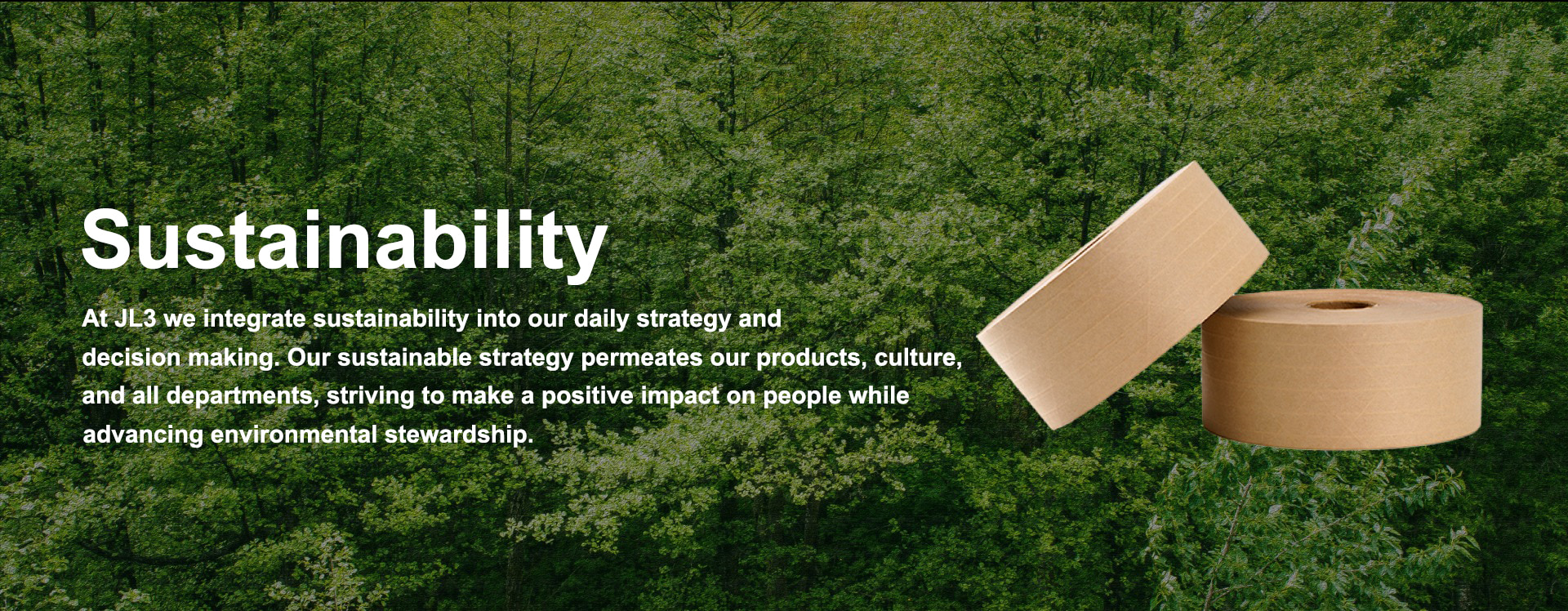
Water-activated kraft tape is the natural fit for most fulfillment parcels. Because its adhesive bonds into the carton fibers, the seal is tamper-evident by construction: a customer who opens the parcel tears the fibers, and the damage cannot be smoothed away and resealed invisibly. That protects both sides — the customer knows the parcel arrived sealed, and the seller has evidence when a claim says it did not. It is also plastic-free and recyclable with the carton, which suits brands that print sustainability claims on the box itself. Match the grade to parcel weight using the standard bands: up to 10 lb, JLN-370 / JLN-382; 10–35 lb, JLN-3140 / JLN-3150; 35–55 lb, JLN-3160 / JLN-3750; 55–90 lb, JLN-3780; over 90 lb, reinforced JLN-37120 / JLN-37120R. For parcels that must be opened and resealed repeatedly in-house before dispatch, a pressure-sensitive tape may still be the practical choice — but for the parcel that leaves the building, the fiber bond is the safer default.
Fulfillment lines do not get faster by telling packers to hurry; they get faster by removing decisions from the bench. Set one preset tape length per repeating carton size, label it at the bench, and position the dispenser so the operator reaches it without stepping or turning. Below about 200 parcels a day, a dispenser station — manual KN-266 or electric KN-366Hi with its hand-wave dispense and programmable presets — is usually the fastest setup, because there is no machine changeover between sizes. Above that volume, a semi-automatic or automatic sealer earns its place, but only if the size mix justifies it: a machine sized for one carton size becomes a bottleneck when twelve sizes arrive in random order. The rule: standardize the carton sizes first, then standardize the seal; automating a chaotic size mix only automates the chaos.
The most common fulfillment sealing mistake is assuming the outbound seal can also be the return seal. A tamper-evident water-activated seal is designed not to come apart cleanly, so a customer who opens it will damage the carton — that is the point. If returns matter, plan for them separately: include a return label and instructions inside the parcel, ship fragile or high-value items in a carton that can survive one opening, or provide a separate return bag or overbox for the journey back. Do not promise customers a resealable carton and then seal it with a tape designed to show tampering. The rule: outbound trust and return convenience are both real goals, but they need two different solutions, not one compromised seal.
Before a parcel leaves: (1) carton correctly sized for its contents, with void fill where needed so items do not shift; (2) grade matched to parcel weight; (3) H-seal applied on parcels over 10 lb, overlaps at least 2 inches on side panels; (4) preset length used, not a freehand cut; (5) seal clean, centered, and fully pressed, with no loose ends for a sorting machine to catch; (6) return route included where returns are expected. A parcel that passes all six is a parcel that arrives looking like it left — and that is the whole brand experience, in a strip of tape.
JL3 supplies fulfillment sealing as a matched set — water-activated kraft and reinforced tapes by parcel weight, tamper-evident seals, manual and electric dispensers, and semi-automatic and automatic sealers for higher volumes — contact us through the inquiry form with your daily parcel volume, size mix, and return rate and we will specify the seal with you. Tape performance values are laboratory averages; test on your own cartons before committing.




 IPv6 network supported