Home

Blog

Blog
  • Don't Pay for Overkill: When to Choose JLN-3100 Light-Duty Reinforced Tape
    Don't Pay for Overkill: When to Choose JLN-3100 Light-Duty Reinforced Tape
    February 10, 2026

    In the packaging world, there is a tendency to always upsell to the "strongest" product available. But let's be honest: if you are shipping t-shirts, cosmetics, or lightweight snacks, you don't need the same tape used to bundle steel pipes. You need security, yes, but you also need to protect your profit margins. This is exactly where the JLN-3100 fits into the market. It is the "Goldilocks" solution in our reinforced tape lineup—strong enough to secure your brand, but priced for high-volume, standard shipping.   What makes it different? The JLN-3100 is defined as our Economy Grade Reinforced Water-Activated Tape. Visually, it looks very similar to its heavier cousins (like the JLN-3150), featuring the classic kraft paper look and a visible fiberglass grid. However, the engineering is tuned for efficiency. It typically uses a slightly lighter weight kraft paper and a more open fiberglass mesh pattern. This reduction in raw material mass lowers the cost per roll significantly, making it competitive with standard plastic tape, yet it retains the crucial "fiber-tearing bond." Once the starch adhesive activates and dries, this tape still becomes one with the box. You get the tamper-evident security—where the box tears if someone tries to open it—without paying for heavy-duty reinforcement you don't actually need.   Who should use it? We recommend the JLN-3100 specifically for light-to-medium duty cartons, typically those weighing under 10kg (22 lbs). It is the ideal upgrade for businesses currently using pressure-sensitive plastic tape (BOPP) who want to move towards a more professional, eco-friendly look without breaking the bank. For an online clothing retailer or a subscription box service, the JLN-3100 offers that premium "unboxing experience"—a clean, branded look with no plastic noise—while maintaining the operational speed of water-activated tape.   The Bottom Line Packaging is about matching the tool to the job. Using a heavy-duty tape on a light box is just throwing money away. The JLN-3100 allows you to standardize your packaging line with a professional, secure, and recyclable-friendly seal, ensuring you are paying for the safety of your product, not for unnecessary specs.

  • Why JLT-609 is the Go-To Tape for Steel and Pipe Bundling
    Why JLT-609 is the Go-To Tape for Steel and Pipe Bundling
    February 05, 2026

    In the hierarchy of adhesive tapes, if standard packaging tape is a string, the JLT-609 is a steel cable. Listed in our catalog as a Mono-Directional Filament Tape, this product is not designed for sealing cardboard boxes; it is engineered for the heavy industrial sector where the primary objective is load containment. When you are dealing with materials that have significant mass and kinetic energy—such as steel coils, metal pipes, or heavy lumber—you cannot rely on a tape that stretches. The JLT-609 is built to solve exactly this problem: providing a rigid, high-tensile hold that keeps heavy, shifting loads securely bundled together during transport. The structural integrity of the JLT-609 comes from its specific composition. It features a PET (Polyethylene Terephthalate) film backing reinforced with continuous fiberglass yarn running longitudinally (mono-directional). This construction gives it immense tensile strength in the machine direction, allowing it to act effectively like a plastic strap but with the convenience of an adhesive tape. The adhesive system used is a synthetic rubber resin (Hot Melt), which provides high initial tack. This is crucial for industrial packers who need the tape to grab onto smooth, sometimes oily metal surfaces instantly without lifting or flagging, ensuring that the bundle stays tight from the moment it is applied. While many filament tapes look similar, the JLT-609 is positioned as a heavy-duty generalist. It balances high tensile strength with durability against abrasion. In practical application, we see this model used extensively for "L-clip" and "C-clip" closures on heavy corrugated boxes, but its true home is in bundling. Whether it is securing loose conduit pipes or reinforcing pallet loads that are prone to shifting, the JLT-609 provides the assurance that the load will remain unitary. For procurement managers in the metalworking or construction supply industries, choosing JLT-609 means replacing the risk of snapped bands and damaged goods with a reliable, high-performance adhesive solution.

  • The 100% Degradable Solution for Heavy Logistics: A Closer Look at KN-37120E
    The 100% Degradable Solution for Heavy Logistics: A Closer Look at KN-37120E
    January 30, 2026

    In the world of industrial packaging, there has historically been a rigid trade-off between sustainability and strength. If you needed to seal a heavy, overstuffed carton for export, you used fiberglass-reinforced tape because it was the only material strong enough to survive the journey. However, the KN-37120E (often inquired about as the 37120 series) fundamentally challenges this limitation. As listed in our technical specifications, this model is a Heavy Duty Reinforced Water-Activated Tape that is 100% degradable. It eliminates the non-recyclable fiberglass mesh found in traditional tapes and replaces it with a robust network of plant-based yarn, allowing high-volume logistics centers to maintain their heavy-duty sealing standards while achieving zero-plastic waste goals.   The engineering behind the KN-37120E is what sets it apart from standard eco-friendly tapes, which are often relegated to light-duty applications. According to our technical data sheet, this tape is constructed with a substantial paper backing composition, combining a 40g/m² top layer with a 70g/m² bottom layer. This dual-layer kraft structure provides the necessary physical bulk and puncture resistance required for heavy industrial handling. Inside this paper "sandwich" lies the critical innovation: a high-density reinforcement grid made entirely of plant-based yarn. We utilize 600D (Denier) yarn in the machine direction (MD) and 200D yarn in the cross direction (CD). This 600D rating in the longitudinal direction is significantly thicker and stronger than the yarn used in our lighter degradable models (like the JLN-3150E, which uses 300D yarn), giving the KN-37120E the tensile power needed to bundle pipes, heavy auto parts, or bulk textiles without snapping.   From an operational perspective, switching to the KN-37120E does not require a change in machinery or process. It utilizes the same starch-based adhesive system as our standard tapes , which activates immediately with water to form a permanent, tamper-proof bond with the carton fibers. The difference is purely in the end-of-life cycle. When a customer receives a box sealed with KN-37120E, they do not need to separate the tape from the cardboard for recycling. The entire package—box and seal—is mono-material and fully repulpable. For brands looking to make a serious commitment to sustainability without risking product damage during heavy transit, the KN-37120E proves that plant-based materials are ready for the heavy lifting.

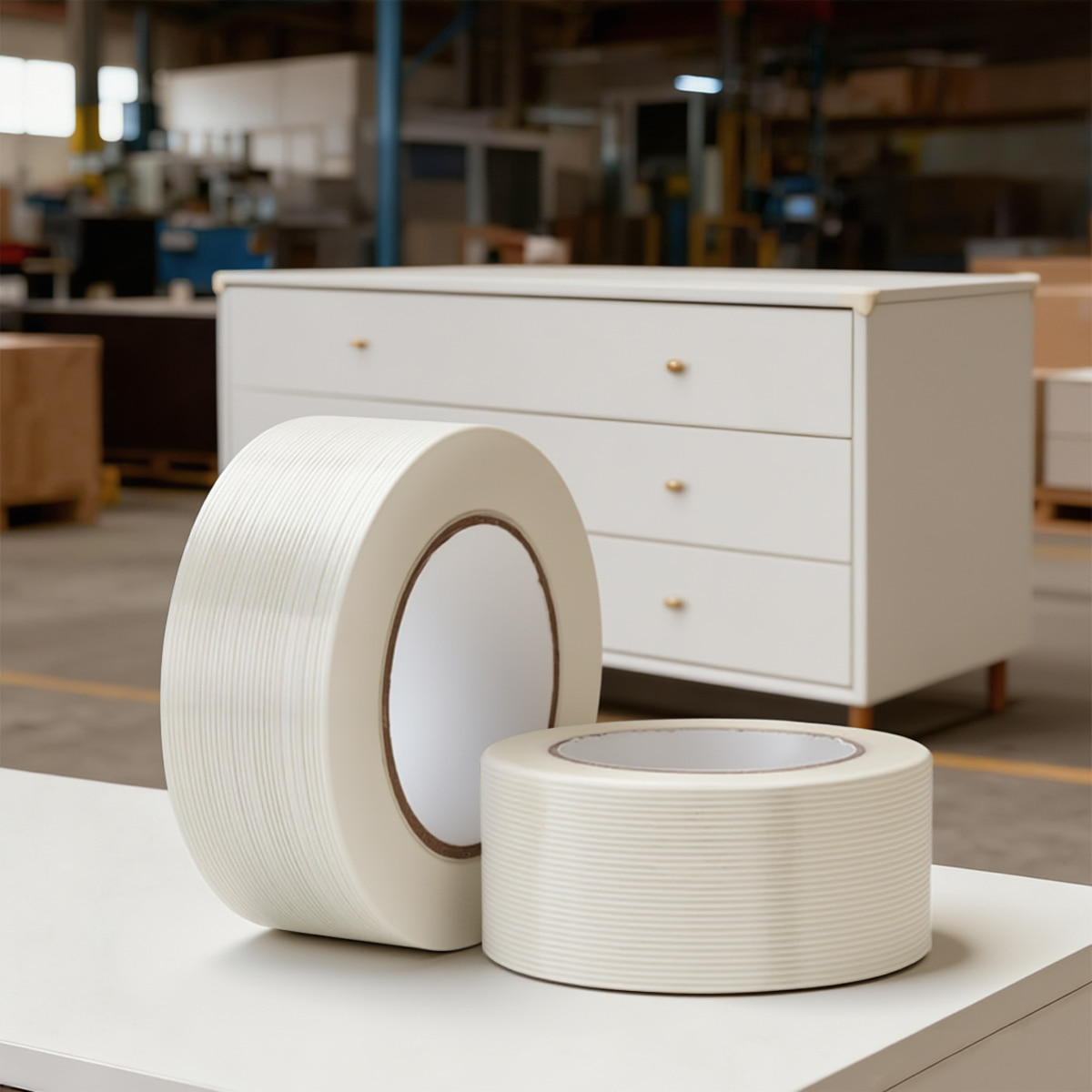
  • Strength Without Stains: Why JLT-615 is the Industry Standard for Furniture Logistics
    Strength Without Stains: Why JLT-615 is the Industry Standard for Furniture Logistics
    January 21, 2026

    Anyone involved in the logistics of furniture and home appliances knows that the damage often doesn't come from the outside; it comes from the inside. A sliding drawer that opens during transit, a cabinet door that swings loose, or a glass shelf that rattles—these internal movements are a primary cause of returns and damages. The industry solution is to tape these parts down, but this creates a secondary problem: "tape residue." There is nothing worse for a customer than unboxing a premium mahogany dresser or a sleek refrigerator only to spend an hour scraping off sticky adhesive marks left by cheap packaging tape. This is specifically why we engineered the JLT-615. The JLT-615 is a Mono-Directional Filament Tape designed with a very specific chemical property: "Clean Removal." While it possesses the robust tensile strength of standard fiberglass tapes—rated at 850 N/25mm—to ensure that heavy drawers and doors remain immobilized even under the vibration of a moving truck, its adhesive system is different. We utilize a specialized synthetic rubber formula that provides high initial tack to grab the surface instantly but is engineered to peel away cohesively. This means when the end-user removes the tape, the adhesive stays on the backing, not on your furniture. It protects the finish of wood, metal, painted surfaces, and glass, ensuring the product looks exactly as it did when it left the factory floor. From a structural standpoint, the JLT-615 features a PET backing reinforced with fiberglass strands. This combination offers a 3-5% elongation at break, providing just enough "give" to absorb shock without snapping. For furniture manufacturers, this tape serves as a temporary structural component during shipping. It effectively locks moving parts in place, replacing the need for cumbersome foam blocks or excessive plastic wrap. By switching to a dedicated "Appliance and Furniture Holding" tape like the JLT-615, you are not just securing your cargo; you are protecting your brand's reputation by ensuring the unboxing experience is clean, professional, and frustration-free.

  • Meeting Heavy Packaging Demands with the KN-366HL
    Meeting Heavy Packaging Demands with the KN-366HL
    January 20, 2026

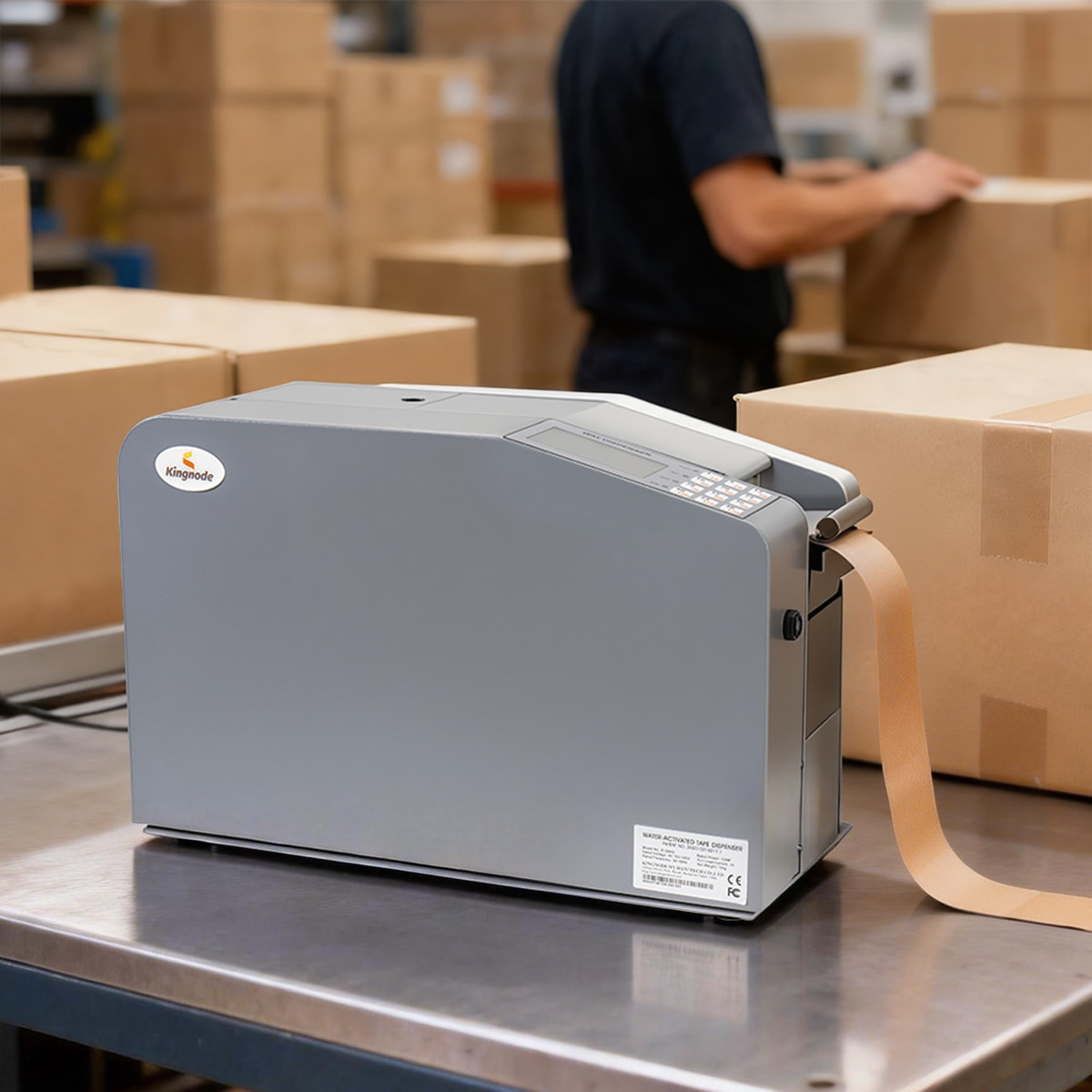
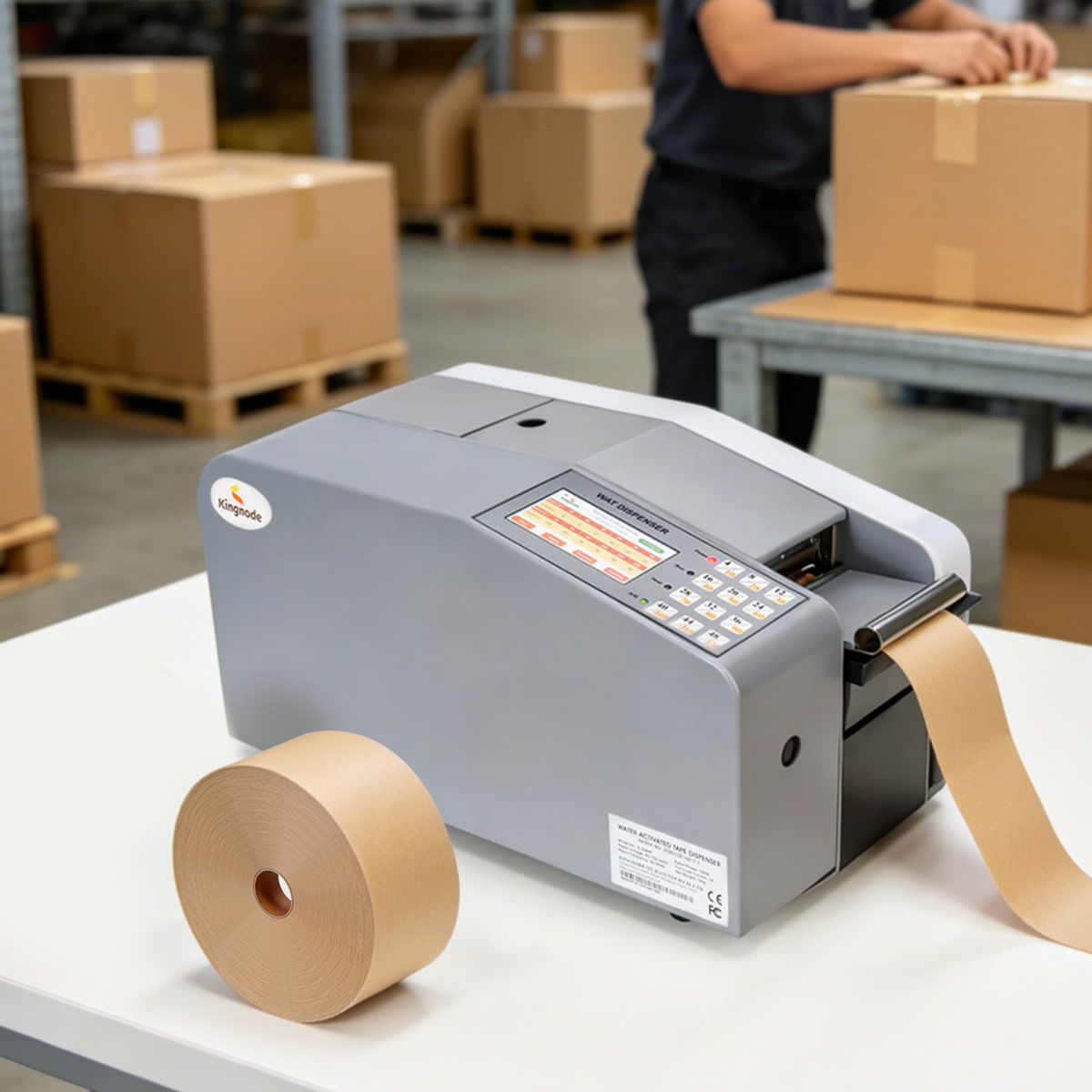
      In high-volume packaging environments, the biggest enemy of efficiency is not slow packers, but frequent interruptions. The machine pictured here, the KN-366HL, is our answer to that specific bottleneck. While it shares the sleek, grey industrial chassis and digital interface of our standard electric series, the "HL" designation stands for "Large". Visually, you can see the expanded side profile compared to standard desktop units. This enlarged capacity is engineered for facilities that push thousands of cartons a day and cannot afford to stop every hour to replace a depleted tape roll. By accommodating larger diameter tape rolls, the KN-366HL significantly extends the intervals between changeovers, keeping your lines moving when it matters most.   Under the hood, the KN-366HL retains the sophisticated "brain" that makes our electric series a favorite among operations managers. It features our IntelliSense cutting technology, which ensures precise tape delivery regardless of load. The interface allows for 12 preset tape lengths, fully programmable with a tolerance of just ±5mm. This is critical for standardization; it ensures that whether a packer is sealing a small component box or a large master carton, they are using the exact amount of material required—no waste, no guessing. Furthermore, the machine helps track productivity with an automatic feature that records the total length of tape dispensed daily, providing managers with real data to audit material usage and packer efficiency.   For fast-paced conveyor lines, the "Auto-dispensing" mode is a game-changer. As specified in our catalog, this machine can be set to automatically dispense the next piece of tape every 3 seconds. This effectively sets a rhythm for the packer, removing the need to manually press a button for every seal. It transforms the packing station from a reactive process to a proactive flow. When you combine this speed with the machine's large roll capacity, you get a workstation that is optimized for continuous, heavy-duty throughput. The KN-366HL is not just a dispenser; it is an infrastructure upgrade for businesses ready to scale their fulfillment operations.

  • No Outlet? No Problem. Why the KN-266 is the Ultimate
    No Outlet? No Problem. Why the KN-266 is the Ultimate "Go-Anywhere" Packaging Tool
    January 15, 2026

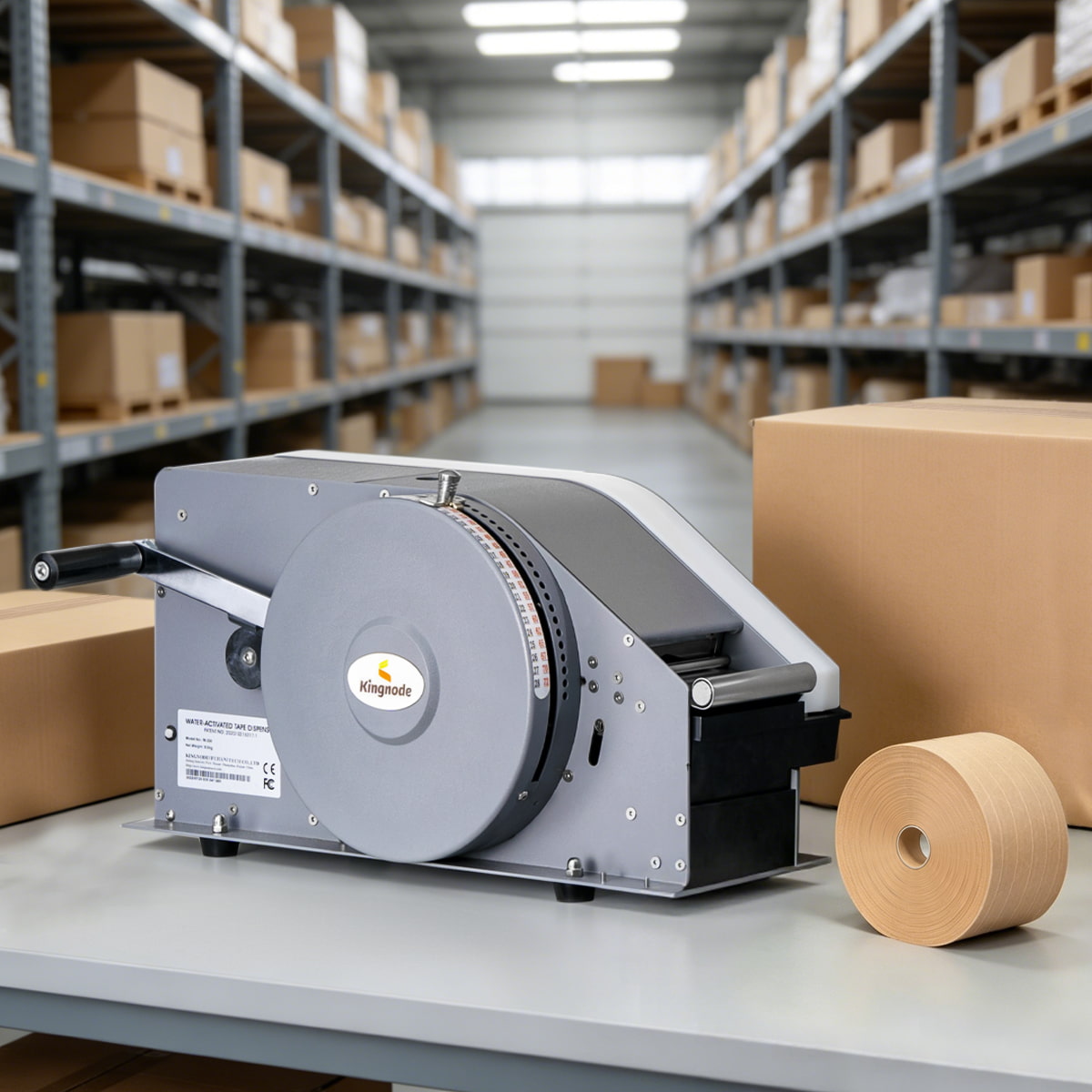
    In modern logistics planning, we often let the location of electrical outlets dictate the layout of our packaging lines. We tether our packers to walls or drop dangerous extension cords from ceilings, limiting flexibility. The KN-266 Manual Water-Activated Tape Dispenser challenges this rigid approach by offering a simple, powerful advantage: it requires absolutely no electricity to operate. This independence transforms it from a stationary machine into a mobile asset. You can mount it on a rolling cart, take it deep into the warehouse aisles for "pick-and-pack" operations, or set up temporary packing stations on a loading dock during peak season rushes—all without looking for a power strip.   There is a misconception that "manual" means "low-tech" or "imprecise," but the KN-266 proves otherwise. It is a precision mechanical instrument. While it doesn't use an electric motor to feed the tape, it utilizes a sophisticated lever system that allows the operator to dispense the exact length required—down to the inch—with a single, smooth motion. The integrated water reservoir and high-grade brush system ensure that the starch adhesive is fully activated just as effectively as an electric machine. This means you get the high-security, tamper-evident seal of gummed tape in a location where an electric machine simply couldn't function, such as inside a shipping container or in an outdoor staging area.   Furthermore, the "no electricity" feature makes the KN-266 exceptionally reliable and low maintenance. There are no solenoids to burn out, no sensors to calibrate, and no circuit boards to fail in humid environments. It is purely mechanical engineering—gears, blades, and levers. For facility managers, this translates to zero downtime due to power outages or electrical faults. Whether you are dealing with a blackout or simply need a machine that can work as hard as your team does in any corner of the facility, the KN-266 provides the freedom to pack where the work is, not just where the power is.

  • Why is JLT-5160 tape used for binding during bridge construction?
    Why is JLT-5160 tape used for binding during bridge construction?
    January 15, 2026

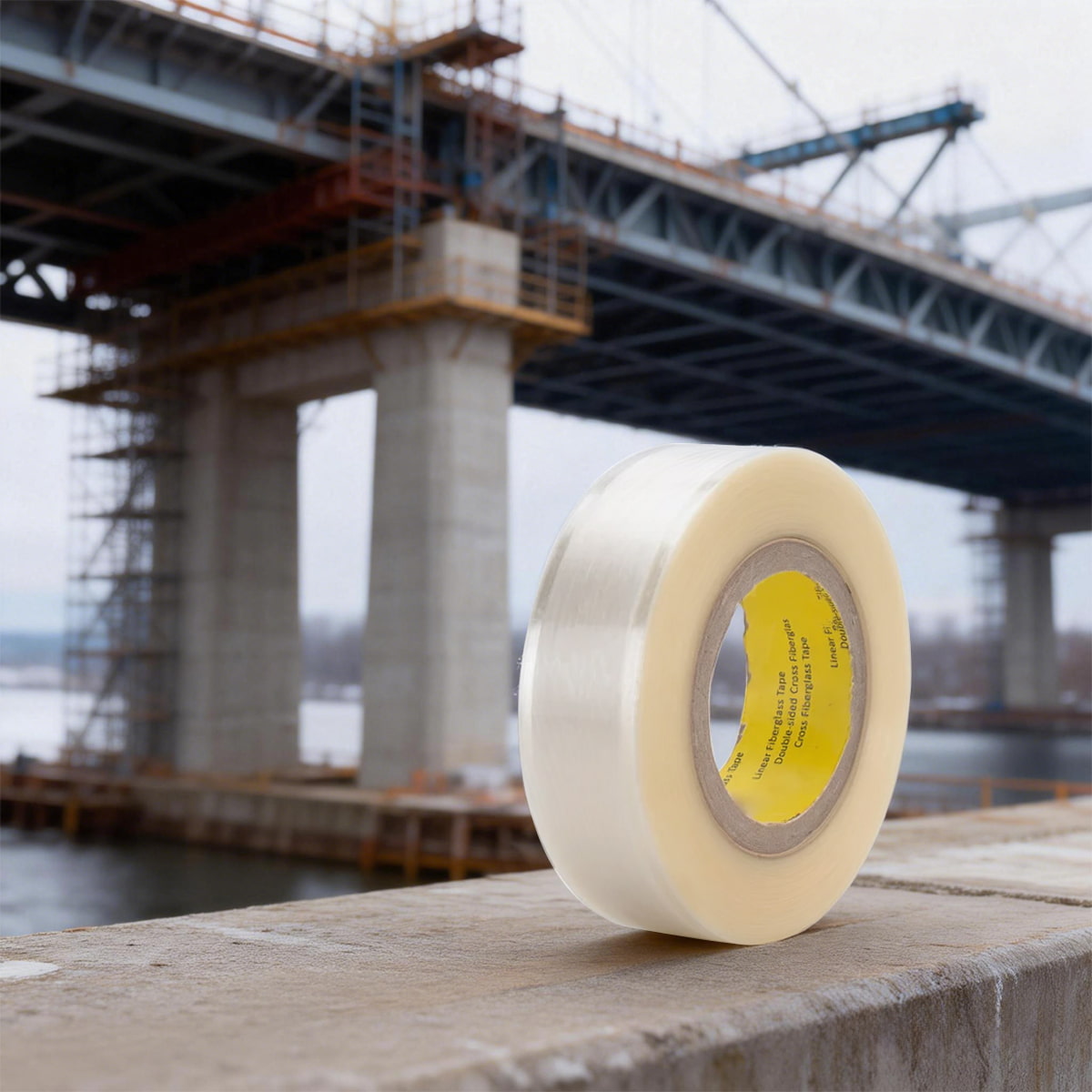
      If you work in general packaging, you might look at this picture and just see a roll of heavy-duty tape. But for those of us in infrastructure and heavy engineering, the JLT-5160 represents a specific tool for a specific problem: how to hold massive, shifting loads without snapping. When you are bundling steel cables for a suspension bridge or securing pre-stressed concrete molds, standard fiberglass tape often fails. Not because it isn't strong enough, but because it's too brittle. It doesn't give.   The JLT-5160 is different. While it sits in our filament tape category, we engineered this specifically for scenarios like the bridge construction site shown in the image. The key here isn't just the raw tensile strength; it's the shock absorption. In these environments, materials expand, contract, and vibrate. A rigid tape that doesn't stretch will shear off under that kind of dynamic stress. This tape is built with a specialized fiber reinforcement—often utilizing high-performance chemical fibers or modified fiberglass blends—that allows for a much higher elongation at break (around 25-28%) compared to the standard 3-5% of regular packaging tapes.   Think of it as a shock absorber versus a steel rod. When a heavy steel bundle shifts during transport to the construction site, the JLT-5160 stretches slightly to absorb that kinetic energy and then holds tight. It doesn't pop. The PET backing is also significantly thicker here, usually around 7.8 mils, because it needs to resist abrasion against rough concrete and rusted steel surfaces. In the field, we often see this tape replacing steel strapping because it doesn't rust, it doesn't cut into the product, and frankly, it's safer for workers to cut and remove without risking injury from snapping metal bands.   So, when you see JLT-5160 specified for a project, it’s not because they needed a "sticker." It’s because they needed a flexible, high-tensile restraint system that acts more like an industrial seatbelt than a piece of stationery. It is about keeping tons of steel and concrete exactly where they are supposed to be until the permanent fixtures take over.

  • The Shift from Sealing to Securing: An Industry Analysis of Reinforced Water-Activated Tape
    The Shift from Sealing to Securing: An Industry Analysis of Reinforced Water-Activated Tape
    January 14, 2026

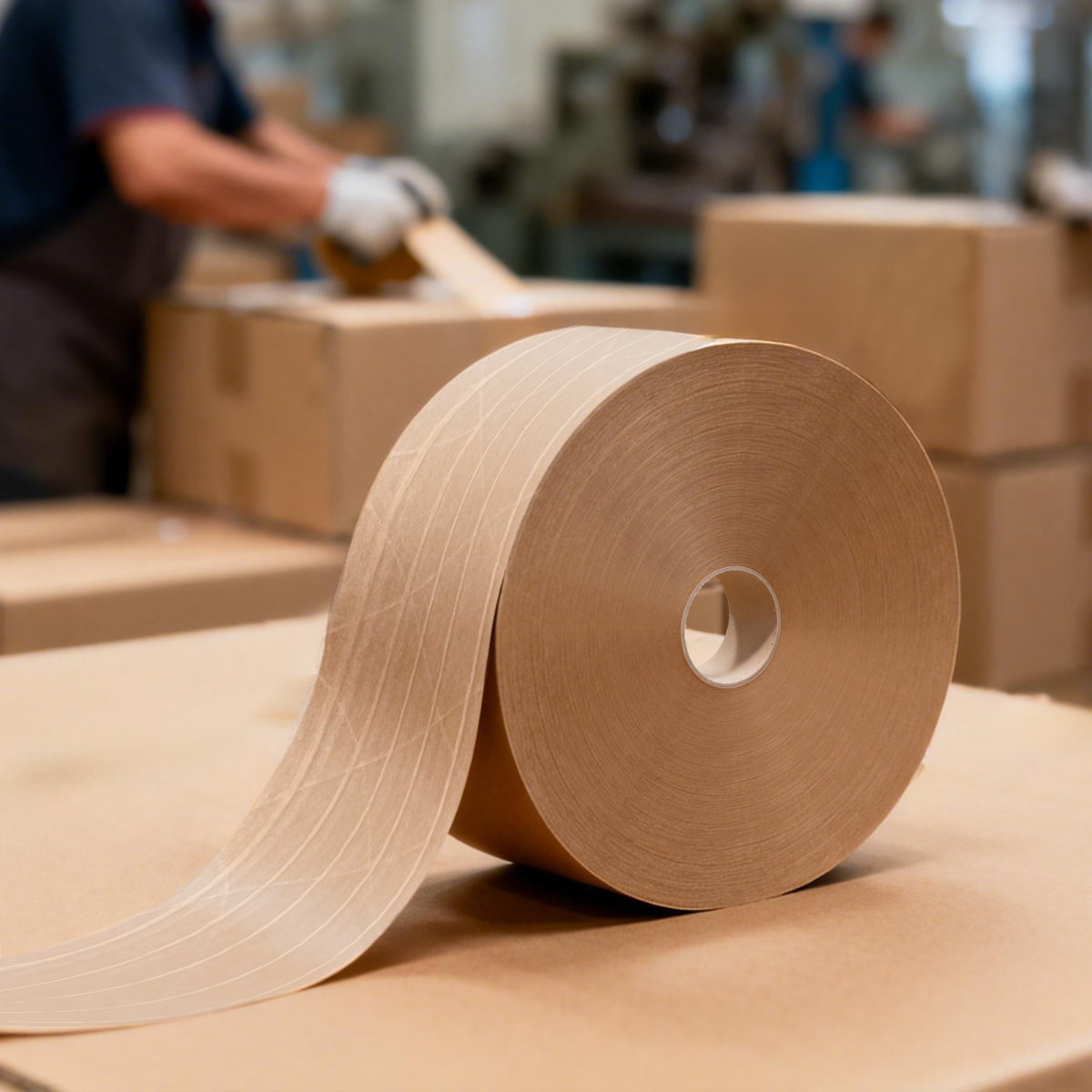
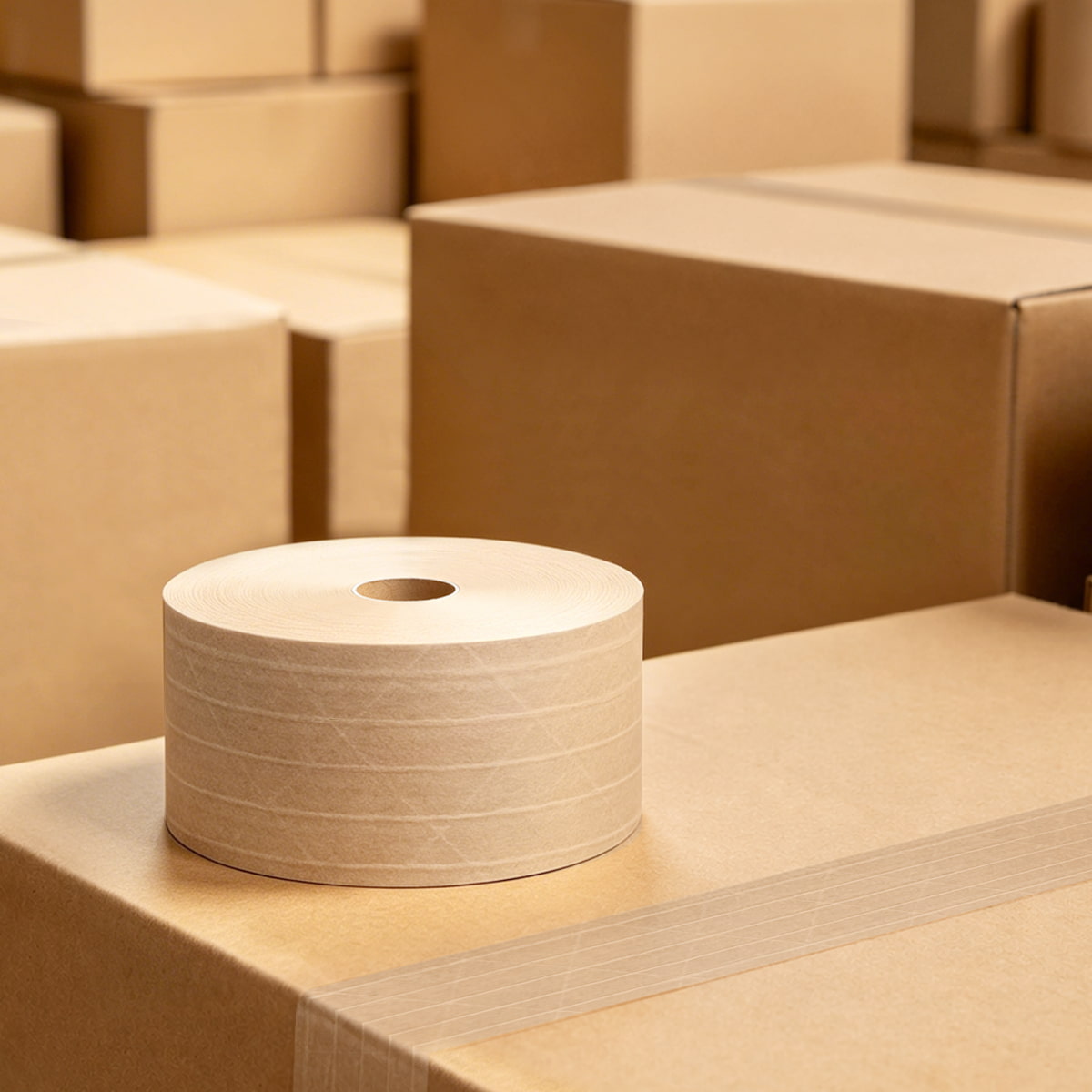
      In the current logistics landscape, packaging tape is no longer just a closure method; it is the first line of defense against product loss and brand dilution. The image provided illustrates a roll of Reinforced Water-Activated Tape (WAT), easily identifiable by the distinct grid pattern of fiberglass strands embedded within the kraft paper. From an industry perspective, the increasing adoption of this specific tape model—such as our JLN-3150 or KN-37120 series—signals a broader shift in e-commerce and industrial shipping towards "tamper-evident" security standards. Unlike pressure-sensitive plastic tapes that sit on the surface of a carton and can be peeled back and re-stuck without detection, the starch-based adhesive on this reinforced tape penetrates the corrugated fibers. Once dried, the tape becomes structurally one with the box, making any attempt at pilferage immediately visible as the box surface itself must be destroyed to open it.   Structurally, the tape shown in the image represents a significant engineering upgrade over standard paper tapes. The visible diamond or cross-weave pattern is formed by fiberglass reinforcement sandwiched between layers of high-strength kraft paper. In logistics analysis, this feature addresses the "bursting strength" required for modern shipping, where packages are subjected to automated sorting systems, drops, and high-stacking pressures. The fiberglass reinforcement acts similarly to rebar in concrete, distributing mechanical stress across the tape's surface rather than allowing it to concentrate at the seam. This prevents the "popping" effect often seen with standard tapes when a heavy box is dropped or compressed, reducing the rate of returns due to shipping damage—a key metric for operational efficiency.   Furthermore, the integration of this tape into automated packaging lines reflects the industry's move toward higher throughput and consistency. While the tape requires water for activation, modern dispensers—like the KN series shown in our equipment lineup—automate this process, measuring, wetting, and cutting the tape in fractions of a second. This combination of machine and material ensures that every box is sealed with the exact amount of tape required, reducing material waste compared to the manual application of plastic tape where operators often apply multiple strips for perceived security. For supply chain managers, the transition to reinforced WAT is not just an environmental choice but a calculation of total cost of ownership, balancing material cost against the savings from reduced theft, lower damage rates, and increased packing speed.

  • Secure, Strong, and Sustainable: Why Reinforced Water-Activated Tape is the Upgrade Your Logistics Needs
    Secure, Strong, and Sustainable: Why Reinforced Water-Activated Tape is the Upgrade Your Logistics Needs
    January 13, 2026

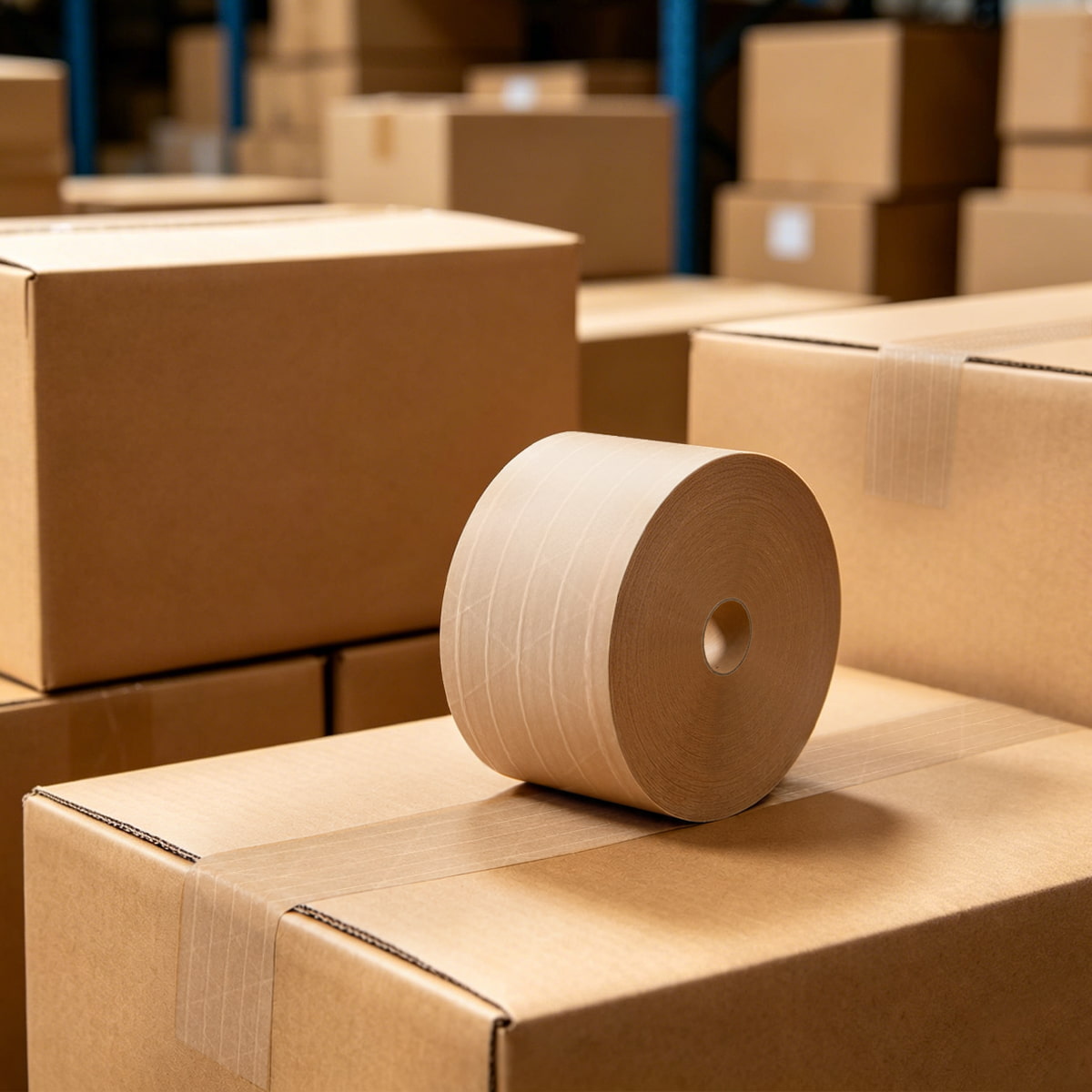
    In the bustling warehouse environment captured in the image, where pallets are stacked high and efficiency is paramount, the choice of sealing material defines the safety of the entire shipment. The product featured here—Reinforced Water-Activated Tape—is not merely a consumable; it is a strategic packaging asset designed to address the three biggest pain points in modern logistics: theft, breakage, and operational speed. As seen in the photo, the tape lays flat and integrates seamlessly with the carton, but its true value lies in the engineering hidden within the paper.   The defining characteristic of this tape, visible as the distinct parallel lines running along the roll in the image, is its fiberglass reinforcement. In our product series, such as the JLN-3150 and KN-37120, we embed a network of fiberglass strands between layers of high-tensile kraft paper. This reinforcement acts like a skeleton, providing exceptional tensile strength that allows the tape to withstand the shocks, drops, and stacking pressures typical of supply chains. Unlike standard plastic tapes that can stretch or snap under tension, our reinforced tape maintains the box's structural integrity, ensuring that heavy items remain securely contained from the warehouse floor to the customer's doorstep.   Beyond physical strength, this tape offers unmatched security through its chemical bonding process. Utilizing a starch-based adhesive system, the tape does not simply sit on the surface of the box; once activated by water, it penetrates the corrugated fibers, effectively welding the tape to the carton. This creates a permanent, tamper-evident seal. As shown on the sealed box in the foreground of the image, the seal is clean and absolute. Any attempt to remove the tape will result in visible destruction of the box surface, providing an immediate deterrent to pilferage—a critical feature for shipping electronics, pharmaceuticals, or high-value retail goods.   Switching to Reinforced Water-Activated Tape also drives operational efficiency. Because of the aggressive bond and fiberglass strength, a single strip is often all that is needed to seal a carton, eliminating the wasteful "double-taping" often required with weaker pressure-sensitive tapes. This "one-strip seal" method not only reduces material consumption but also speeds up the packing line, especially when paired with our automated dispensers. For businesses looking to professionalize their packaging while ensuring their products arrive safe and sound, this reinforced solution is the industry gold standard.

1 2 3 4 ... 14
A total of14pages

We are ready to provide you with the best solutions for your packaging needs.

Send A Message

Send A Message
If you are interested in our products and want to know more details,please leave a message here,we will reply you as soon as we can.
Submit
Contact Us:info@jl3tape.com

Home

Products

whatsApp

contact