Home

Blog

Blog
  • Filament Tape: The Heavy-Duty Champion for Industrial Bundling and Sealing
    Filament Tape: The Heavy-Duty Champion for Industrial Bundling and Sealing
    April 28, 2026

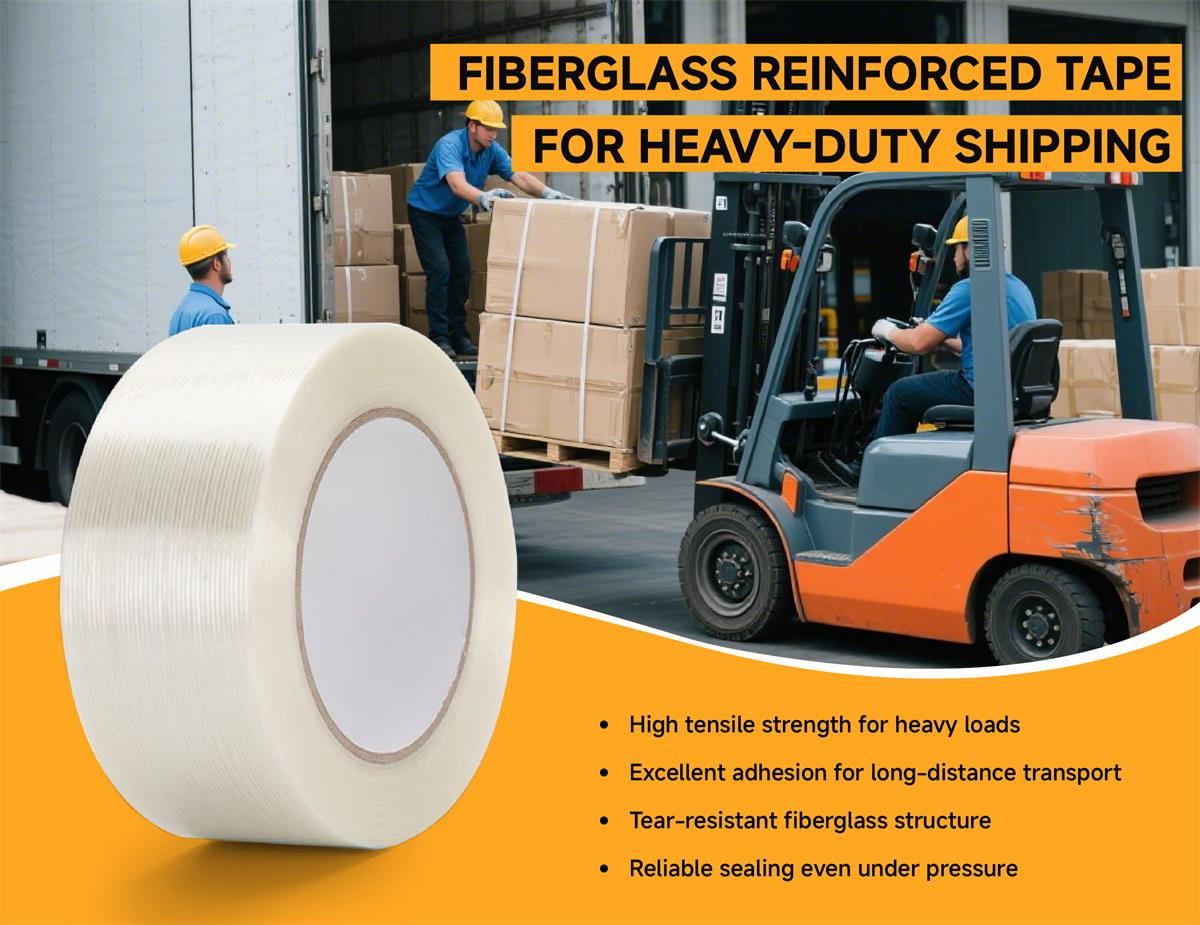
    When we encounter packaging challenges that require more than just a simple seal—such as bundling steel pipes, securing appliance doors during transit, or palletizing heavy cardboard boxes—standard plastic tapes often fall short. This is where Filament Tape comes into play. As shown in the image, this tape is easily recognizable by the visible strands of fiberglass embedded within the adhesive layer. These strands act like the steel rebar in concrete, providing exceptional tensile strength that prevents the tape from snapping under high stress. In our product catalog, these are categorized under the JLT (Uni-Directional) and JLW (Bi-Directional) series, designed specifically for scenarios where material integrity and load stability are non-negotiable.   The structural core of our filament tape typically consists of a PET (Polyethylene Terephthalate) or BOPP backing paired with a synthetic rubber or hot melt adhesive. The defining feature, however, is the reinforcement. For applications requiring strength primarily in one direction—such as bundling tubes or holding coils—we recommend our Uni-Directional Filament Tapes like the JLT-602 or JLT-602A. The JLT-602A, for instance, offers heavy-duty tensile strength up to 850 N/25mm, making it capable of handling significant mechanical loads with minimal elongation (3-5%). For more complex sealing needs where stress might come from multiple angles, our Bi-Directional (Cross-Weave) tapes, such as the JLW-325, utilize a fiberglass grid pattern that prevents the tape from splitting longitudinally, providing a secure "H" seal for heavy cartons.   The tagline in the image, "Ship with Sustainability," highlights an often-overlooked aspect of high-strength industrial tapes: material efficiency. Because filament tapes like our JLT-605 possess such high tensile strength and aggressive adhesion, a single strip is often sufficient to secure a load that would otherwise require multiple layers of standard packing tape. Furthermore, we offer specialized variations like the "Clean Removal" series (e.g., JLT-607A), which are specifically engineered for the appliance and furniture industries. These tapes hold moving parts like refrigerator doors or printer trays securely during shipping but can be peeled off cleanly by the end consumer without leaving the messy adhesive residue associated with cheaper alternatives, thereby reducing the need for cleaning solvents and preventing surface damage.   Ultimately, choosing the right filament tape is about matching the tensile strength and adhesive properties to your specific industrial application. Whether you need the extreme holding power of the JLT-6614 for bridge construction and steel bundling, or the balanced performance of the JLT-602 for general packaging, these tapes provide the structural confidence that your goods will arrive intact. By utilizing a tape engineered for durability, you minimize the risk of product damage and return...

  • Instructions regarding 100% biodegradable tape
    Instructions regarding 100% biodegradable tape
    April 23, 2026

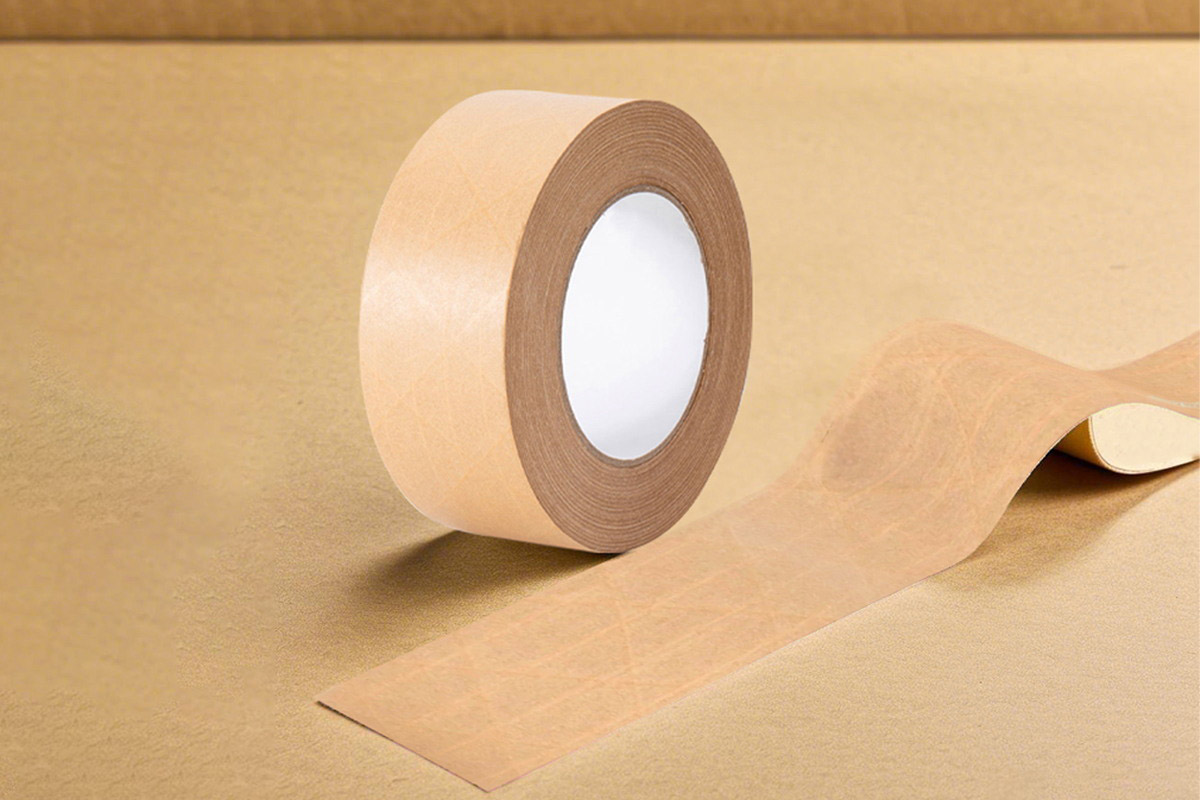
    In the industrial packaging sector, the term "Eco Tape" is often used loosely, but for a manufacturer, it refers to a specific engineering challenge: replacing non-degradable synthetic components with renewable alternatives without sacrificing tensile strength. The product shown in the image represents our solution to this challenge—a 100% degradable reinforced water-activated tape. While standard reinforced tapes rely on fiberglass strands to prevent snapping under heavy loads, this eco-friendly iteration utilizes plant-based yarn. This material innovation allows the tape to maintain the heavy-duty bundling and sealing capabilities required for logistics while ensuring that the entire packaging solution—box and seal combined—can return to the earth without leaving microplastic residue. The "Eco" designation in our product line, specifically models like the JLN-3150E or KN-37120E, is defined by its complete material composition. The backing is robust kraft paper, the adhesive is a plant-derived starch formulation that bonds permanently with corrugated cartons, and the reinforcement grid is made from biodegradable plant fibers rather than glass or polyester. This structural design solves a critical recycling bottleneck: standard fiberglass tapes must be filtered out during the paper repulping process, whereas our degradable water-activated tapes can be processed directly with the carton or composted. For businesses shipping heavy goods, this means achieving the high-security, tamper-evident seal of a traditional reinforced tape while fully aligning with zero-waste and circular economy protocols.

  • KN-366 Series Electric Water Activated Tape Dispenser: Programmable Control for Consistent Starch Adhesive Activation
    KN-366 Series Electric Water Activated Tape Dispenser: Programmable Control for Consistent Starch Adhesive Activation
    April 18, 2026

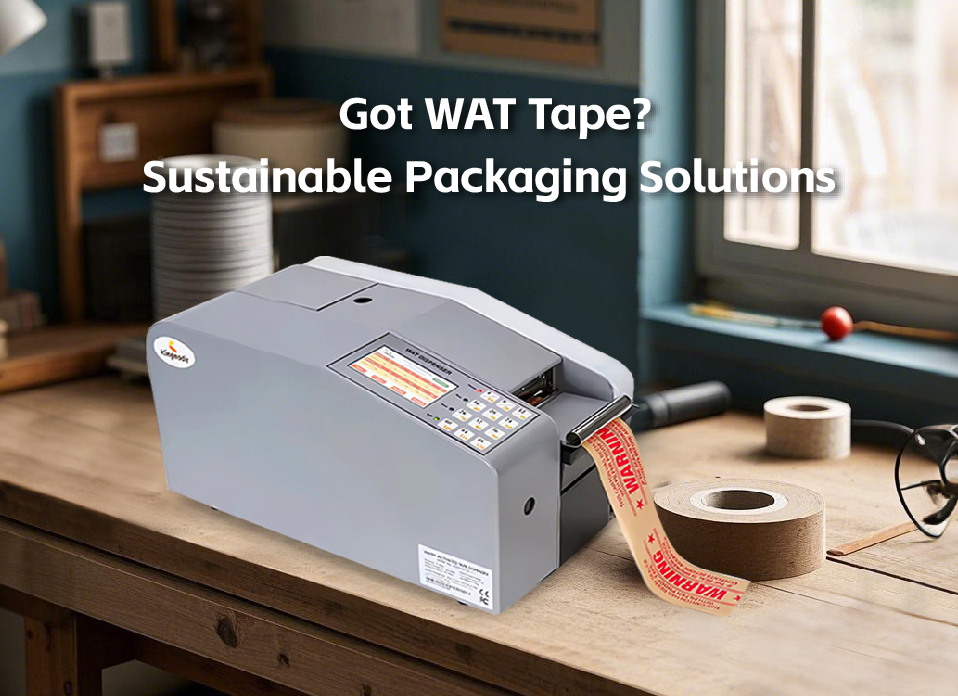
    Within our packaging tape product system, the KN-366 series occupies the operational tier between manual pull-and-tear units and fully automated case sealers. It is engineered as an electric dispensing platform for starch-based water activated tapes, specifically those reinforced with fiberglass or plant-based yarn. The primary function of this equipment is to standardize the wetting, cutting, and application phases of paper-based sealing, which directly influences the bond strength and tamper-evident performance of the final seam. By replacing variable manual techniques with programmable control logic, the KN-366 addresses the common inconsistency operators face when managing water volume, tape length, and cutting frequency across different box sizes.   The structural design centers on a microprocessor-controlled drive system paired with an automated sensing array. The IntelliSense cutting module detects hand motion within a designated zone, triggering a precision blade without requiring physical contact. Tape length can be preset across twelve programs with a tolerance of plus or minus five millimeters, aligning with standard corrugated flap dimensions. Auto-dispensing operates on a configurable timer, defaulting to a three-second interval for continuous runs. Daily usage tracking records total dispensed length and box counts, while a preset seal counter pauses the unit to prevent overconsumption. Connectivity ports allow integration with conveyor-based packaging lines, and the system includes a low-water alert to maintain adhesive activation quality. These parameters are managed through a dedicated interface that requires minimal training, allowing shift operators to maintain consistent output without relying on motorized conveyor dependency.   Proper moisture balance is critical: insufficient water limits fiber penetration and reduces initial tack, while excess water compromises the tensile strength of the kraft substrate before curing. The dispenser controlled wetting mechanism ensures that light-duty unreinforced tapes, medium-duty fiberglass grades, and heavy-duty plant-yarn variants all achieve uniform activation. This consistency is necessary for packages undergoing mechanical sorting, pallet stacking, or extended transit cycles.    The series offers multiple configuration paths based on facility layout and throughput requirements. Battery-powered variants provide mobility for packing stations without fixed power access, while heated models optimize adhesive activation in cooler warehouse conditions. High-speed configurations reduce cycle time for medium to high-volume operations. Routine maintenance involves monitoring water reservoir levels, verifying blade alignment, and clearing starch residue from the distribution rollers, which can be completed during standard shift intervals. For facilities evaluating a transition from BOPP plastic sealing tape to fiber-based alternatives, the KN-366 serves as a controlled depl...

  • KN-266 Manual Water Activated Tape Dispenser: Mechanical Reliability for Paper-Based Sealing
    KN-266 Manual Water Activated Tape Dispenser: Mechanical Reliability for Paper-Based Sealing
    April 15, 2026

     Within our packaging tape product portfolio, the KN-266 is positioned as a manual dispensing and cutting unit designed for starch-based water activated tapes. It serves as the operational interface between the tape roll and the box sealing task, relying on a lever-actuated mechanical cutting system rather than electric or pneumatic drives. This design choice prioritizes durability, low maintenance, and consistent performance in environments where power access is limited or where operators prefer direct tactile control over the sealing process.   When the operator pulls the tape to the desired length and presses the lever, a hardened blade engages the reinforced kraft paper substrate, delivering a clean cut without crushing or fraying the fiberglass or plant-based yarn reinforcement. The water application is managed through an adjustable sponge or brush reservoir, allowing the user to control moisture levels based on ambient temperature, humidity, and tape width. This manual regulation is critical for starch adhesive activation: sufficient water ensures bond strength, while excess moisture can compromise the tensile integrity of the paper backing during handling.   From a material and adhesive system perspective, the KN-266 is compatible with our full range of water activated tapes, including light-duty unreinforced grades for e-commerce parcels, medium-duty fiberglass-reinforced tapes for appliance packaging, and heavy-duty options for industrial crates or export cartons. The dispenser does not alter the tape's chemical composition but ensures repeatable wetting and cutting, which directly influences seal reliability.     The manual operation model offers practical advantages for small to mid-volume packing lines, mobile repair stations, or facilities transitioning from plastic BOPP tape to fiber-based alternatives. Without reliance on electrical components, the KN-266 minimizes downtime related to motor failure, sensor calibration, or software updates. Routine maintenance involves cleaning the water reservoir, inspecting the blade edge, and verifying lever tension—tasks that can be completed during standard shift changes. For operators accustomed to speed and repeatability, the learning curve is short: after a few cycles, muscle memory enables efficient tape length estimation and lever actuation. When integrating the KN-266 into a packaging workflow, we recommend pairing it with tapes that match the box weight and handling conditions. For light to medium packages, a 2.8 mil unreinforced or lightly reinforced tape suffices; for heavy or irregular loads, a 5.5 mil fiberglass-reinforced grade is advisable. The dispenser accepts standard 3-inch core rolls and accommodates tape widths from 36mm to 72mm.  For facilities scaling their paper-based sealing operations, the KN-266 can serve as a pilot unit before committing to fully automated lines, providing real-world data on tape consumption, operator preference...

  • JLN-3150 Light Duty Reinforced Water Activated Tape Specification and Application Guide
    JLN-3150 Light Duty Reinforced Water Activated Tape Specification and Application Guide
    April 11, 2026

    Within our reinforced water activated tape range, JLN-3150 is positioned as the standard light duty grade. It is designed for routine carton sealing where standard paper tape lacks the tensile strength or tamper resistance required for reliable transit.   The construction combines a natural kraft paper backing with an integrated fiberglass reinforcement grid and a starch based adhesive system. The backing weight is one hundred twenty seven grams per square meter with a total thickness of zero point one four millimeters. The reinforcement architecture uses five strands of G110 fiberglass in the machine direction and three strands of G150 fiberglass in the cross direction, spaced at one point one inch intervals with a forty five degree cross angle. This specific grid configuration provides balanced tear resistance and prevents edge splitting during high speed case sealing or when cartons experience minor compression. The adhesive is a dry starch coating applied at forty grams per square meter on both the top and bottom surfaces. It remains inactive until water is applied. Upon activation, the starch migrates into the corrugated board fibers, creating a mechanical bond that dries into a single structural unit with the carton. This eliminates the delamination issues common with pressure sensitive plastics.    JLN-3150 reaches its full holding strength after ambient drying, typically within two to four hours depending on facility ventilation. The primary function is secure closure for light to medium weight packaging where plastic waste reduction is a priority. The embedded fiberglass strands provide immediate tamper evidence. Any unauthorized opening fractures the paper backing and leaves a visible grid pattern on the carton surface. Because the tape contains no plastic film or synthetic adhesives, it passes through standard corrugated recycling streams without separation.  Proper application requires a water activated dispenser that controls moisture delivery and cut length. Under wetting leaves the starch underdeveloped, while over wetting temporarily softens the paper before curing. Once dry, the seal behaves as a reinforced extension of the box. Selection of this grade is appropriate when carton weights remain under twenty five kilograms, transit conditions are standard, and packaging lines require a predictable, plastic free sealing material that integrates directly with existing waste management protocols.  

  • Understanding JLN-37120 Heavy Duty Reinforced Water Activated Tape
    Understanding JLN-37120 Heavy Duty Reinforced Water Activated Tape
    April 10, 2026

    Within our reinforced water activated tape series, JLN-37120 occupies the heavy duty tier. It is engineered for applications where standard packaging tape fails under dynamic load, environmental exposure, or tamper risk. The construction follows a three component architecture. The backing consists of high tensile kraft paper with a basis weight of 176 grams per square meter. Embedded within it is a fiberglass reinforcement grid configured in a two by two machine direction layout with a cross directional reinforcement spaced at one inch intervals and oriented at a forty five degree angle. This geometry distributes tensile stress across the tape width rather than concentrating it at the edges, which is critical when sealing cartons subjected to shifting loads or rough handling.    The adhesive system is starch based. It remains inert until activated with water, at which point it penetrates the fibers of corrugated board and forms a mechanical bond that integrates with the carton structure itself. This bonding method eliminates the edge lift and delamination common with pressure sensitive alternatives. In practice, the tape reaches its full holding strength after drying, which typically requires several hours depending on ambient humidity and ventilation. The primary function of JLN-37120 is secure case sealing for heavy weight shipments and industrial packaging where carton integrity must survive vibration, stacking, and transit. The visible fiberglass grid and the paper substrate provide immediate tamper evidence. Any attempt to remove the tape fractures the backing and tears the carton surface, leaving clear proof of intervention. Because the materials are paper and starch, the tape is fully recyclable with corrugated waste and leaves no plastic residue in recycling streams.     The tape is applied using water activated dispensers that control moisture delivery and cut length. Proper water activation is essential. Insufficient moisture leaves the starch underdeveloped, while excess water weakens the paper temporarily before drying. Once cured, the seal behaves as a structural extension of the carton. Selection of this grade should be guided by carton weight, expected transit conditions, and disposal or recycling requirements. When the load exceeds thirty kilograms or when tamper evidence is a priority, JLN-37120 provides a predictable, non plastic solution that aligns with standard corrugated recycling infrastructure.  

  • LN-2740H Self-Adhesive Kraft Tape for Light Duty Sealing and Office Fulfillment
    LN-2740H Self-Adhesive Kraft Tape for Light Duty Sealing and Office Fulfillment
    April 08, 2026

    The JLN-2740H self-adhesive kraft paper tape serves as a light-duty, non-reinforced solution designed for packaging speed and carton consistency. Unlike water-activated kraft tape that requires moisture to penetrate cardboard fibers, this model employs a hot melt adhesive system that bonds instantly upon contact. This eliminates packaging delays, enabling operators to seal cartons quickly using standard handheld dispensers or manual pull-and-tear methods.   From a structural standpoint, the JLN-2740H combines a 70 g/m² kraft paper backing with a controlled hot melt adhesive coating, resulting in a total weight of 112 g/m² and a thickness of 0.125 mm. The absence of fiberglass reinforcement keeps the tape flexible and easy to tear by hand or with simple cutters, reducing blade wear on lightweight dispensing equipment. Peel adhesion measures 21 N/25mm, with tensile strength of 75 N in the machine direction and 90 N in the cross direction. These specifications align with light-duty corrugated carton packaging, covering most e-commerce parcels, retail shipments, and internal parts transfers.   We position this product within our self-adhesive lineup as a direct replacement for plastic-based BOPP tape, particularly when recyclability and surface appearance are priorities. The kraft paper backing matches the color and texture of corrugated cartons, creating a uniform package profile. Since it uses hot melt adhesive rather than starch-based formulations, it performs reliably in standard indoor environments without requiring the curing time that water-activated alternatives need. The tape feeds consistently through manual dispensers and aligns with common case sealer guides, preventing tracking issues during high-volume desktop packing operations.   As the baseline model for light-duty carton sealing, the JLN-2740H delivers predictable performance, straightforward application, and full compatibility with standard cardboard recycling streams, with the adhesive causing no interference to recycled paper pulp.  

  • Heavy Duty Water Activated Tape for High Stress Packaging Environments
    Heavy Duty Water Activated Tape for High Stress Packaging Environments
    April 06, 2026

    A pallet stacked four levels high with thirty kilogram boxes does not care about marketing claims. It responds to tensile strength, adhesive penetration, and reinforcement density. The JLN-37120 sits at the top of our reinforced water activated tape range, engineered specifically for heavy duty packaging where box failure translates directly into damaged goods and freight claims.   The construction starts with a one hundred seventy six grams per square meter kraft paper backing. This weight provides puncture resistance and dimensional stability during automated dispensing. The adhesive system applies forty grams per square meter on the top side and seventy grams per square meter on the bottom side. When water activates the starch based formula, the higher bottom coating ensures rapid fiber penetration into the corrugated substrate. This creates a fiber tear bond that becomes structurally integrated with the carton rather than sitting on the surface.   Reinforcement defines the heavy duty classification. Six longitudinal fiberglass yarns spaced at seventy six millimeter intervals run through the machine direction, supplemented by four cross direction yarns laid at a forty five degree angle. This grid pattern distributes impact stress across the tape width instead of concentrating it at the flap edges. Tensile strength in this configuration resists splitting when boxes shift during transit or when strapping compresses loaded pallets. The tape maintains integrity under stacking pressures that would cause standard paper tape to delaminate.   Application scenarios follow the physical demands of the load. We specify JLN-37120 for export cartons, industrial component shipping, and heavy retail distribution where boxes exceed forty five kilograms. The fiber tear characteristic provides tamper evidence for high value electronics and pharmaceutical batches. Facilities handling automotive parts, machinery components, or bulk consumer goods use this grade when pallets travel through multi modal logistics networks involving rail, ocean, and long haul trucking. The starch adhesive and kraft backing remain fully recyclable with the corrugated material, which simplifies waste processing for distribution centers managing thousands of units daily.   Temperature and humidity variations during transit test adhesive performance. Starch based systems cure through moisture evaporation, forming a rigid bond that withstands temperature swings between minus five and seventy degrees Celsius. This range covers most warehouse storage and continental shipping conditions. For facilities operating in tropical climates or unconditioned freight containers, the heavy backing weight prevents moisture absorption from weakening the tape structure before activation.   The standard seventy millimeter and seventy two millimeter widths align with common case sealer specifications. These dimensions provide sufficient flap overlap for regular slotted containers whi...

  • What Sealed Boxes Reveal About Tape Performance and Line Efficiency
    What Sealed Boxes Reveal About Tape Performance and Line Efficiency
    April 03, 2026

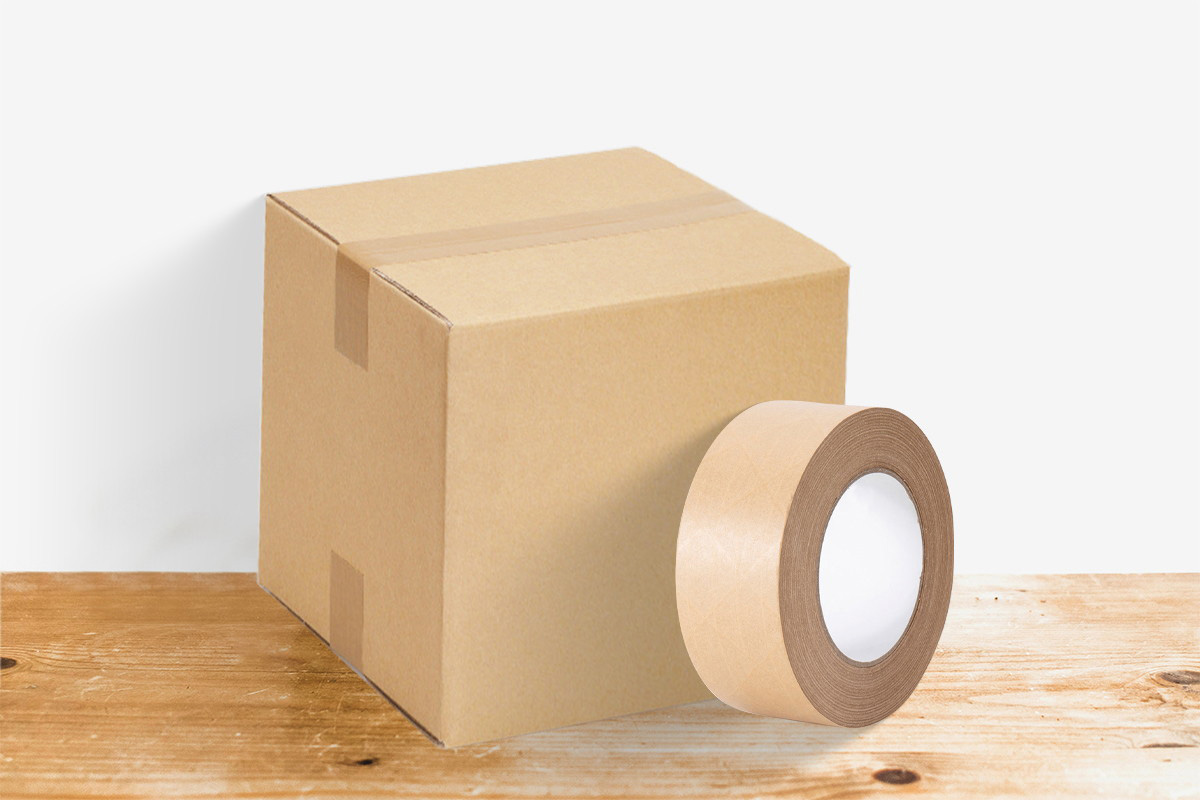
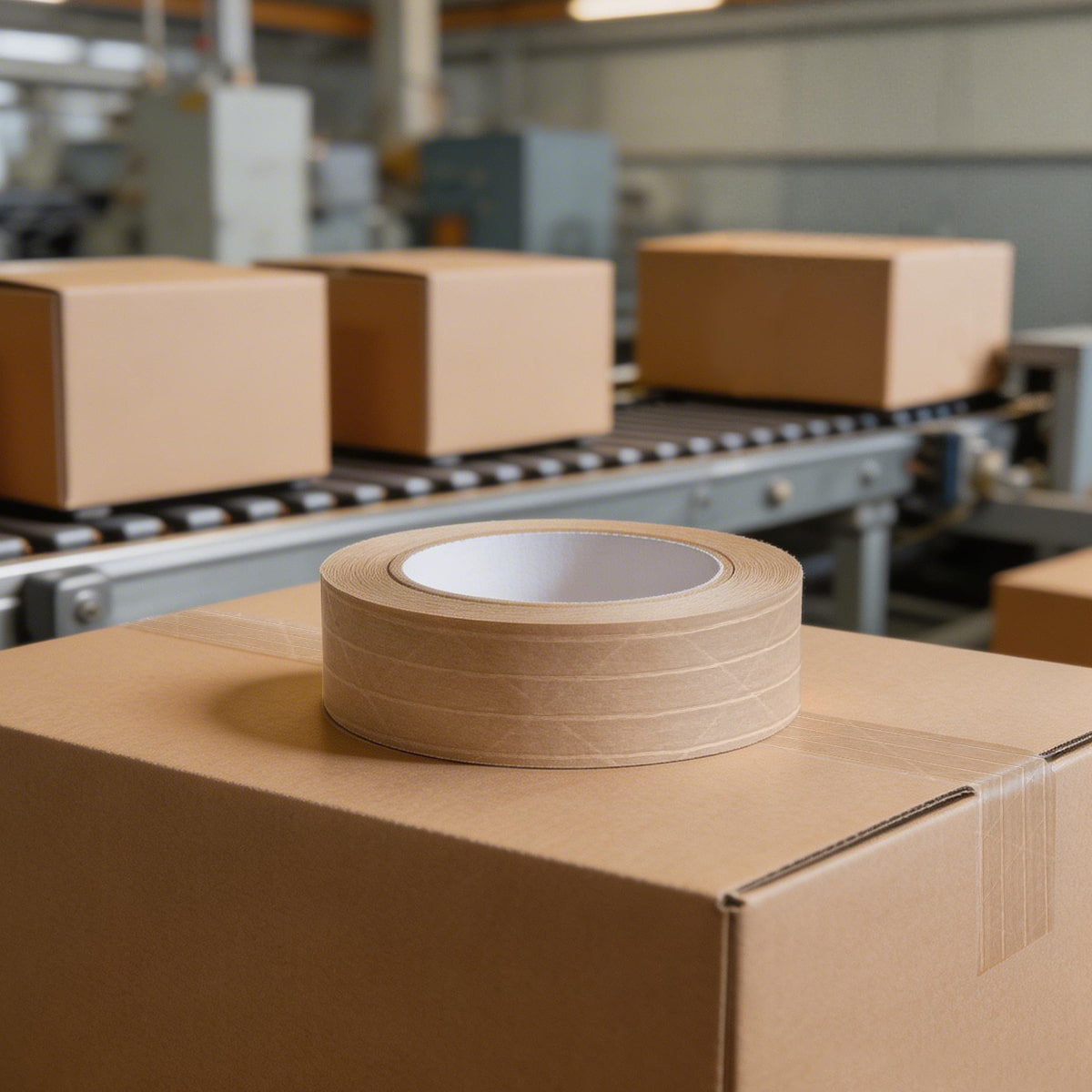
    A row of sealed boxes on a packing table tells you more about tape performance than any spec sheet can. The uniformity of the seal, the way the tape conforms to box edges, and the absence of wrinkles or bubbles all point to proper adhesive activation and consistent application. These boxes in the image demonstrate what happens when water activated tape is applied correctly—the starch adhesive has penetrated the cardboard fibers, creating a bond that matches the strength of the box itself.   From a manufacturing standpoint, we evaluate tape performance through several measurable factors. First is the consistency of the adhesive coating. When starch-based adhesive is applied at the correct weight—typically 40g/m² on each side for standard reinforced tape—it activates uniformly when moistened. This ensures the tape bonds immediately upon contact with the corrugated surface without requiring excessive pressure or dwell time. The boxes shown here exhibit clean, flat seals with no lifting at the edges, indicating proper water-to-adhesive ratio during dispensing.   Second is the reinforcement structure's contribution to seal integrity. For light to medium duty applications, five to six fiberglass yarns in the machine direction provide adequate tensile strength to resist splitting during handling and stacking. The cross-direction reinforcement at 45-degree angles prevents tear propagation if the box is dropped or impacted. This specific reinforcement pattern allows the tape to maintain its hold even when boxes are stacked three or four levels high on pallets, which is standard practice in warehouse storage and transportation.   Third is the interaction between tape width and box size. Standard 48mm or 72mm widths work well for regular slotted containers (RSC) because they provide sufficient overlap on the box flaps without excessive waste. The tape in these images appears to be 48mm or 72mm, which is appropriate for the box dimensions shown. Using tape that is too narrow risks inadequate coverage, while tape that is too wide increases material cost without proportional benefit.   Operators running manual or semi-automatic case sealers need to consider tape dispensing speed relative to box throughput. Water activated tape dispensers with programmable length settings reduce waste by cutting tape to exact box dimensions rather than relying on operator estimation. The clean, consistent seals visible here suggest either well-trained operators using manual pull-and-tear dispensers or automated systems with precise length control.   From a sustainability perspective, these sealed boxes can enter the recycling stream without tape removal. The kraft paper backing and starch adhesive are fully biodegradable and do not contaminate the cardboard recycling process. This is a significant advantage over BOPP or PVC tapes, which must be removed before recycling or end up as contaminants in the recycled pulp.   For fac...

1 2 3 ... 15
A total of15pages

We are ready to provide you with the best solutions for your packaging needs.

Send A Message

Send A Message
If you are interested in our products and want to know more details,please leave a message here,we will reply you as soon as we can.
Submit
Contact Us:info@jl3tape.com

Home

Products

whatsApp

contact